
This Video = The Future of Work?
Early in my workplace strategy journey, I became a habitual consumer of "future of work" content. Most of it came as dense reports and confident predictions. Useful, but abstract.
I wish I'd had today's AI tools back then.
In 2013, I discovered a video that stood out because it was a simulation, not another talking head. The premise: an organization that goes all-in on talent marketplaces in the distant future of…2020.
And makes a radical real estate decision.
I loved it. I sent it to dozens of colleagues and had the YouTube link bookmarked from Credit Suisse through JLL and WeWork. Then it was taken down sometime around, ironically, 2020.
In the post-pandemic era, I found myself wanting to watch it again. Down the rabbit hole I went, and unbelievably, I found it on the Wayback Machine! From there, I tracked down the creator, as I did in my stock photo investigation. He was generous enough to share the backstory, why they made it, and what real client work it was echoing.
Meet Vision Resources.
Be Kind, Rewind
The video was produced by PwC and hosted on PwC Hungary's YouTube channel. It's set inside a fictional company called Vision Resources, where "resourcing" runs like an internal digital market. The workforce is mostly contractors who commit to a minimum annual availability, then set weekly minimums and maximums for how much they want to work.
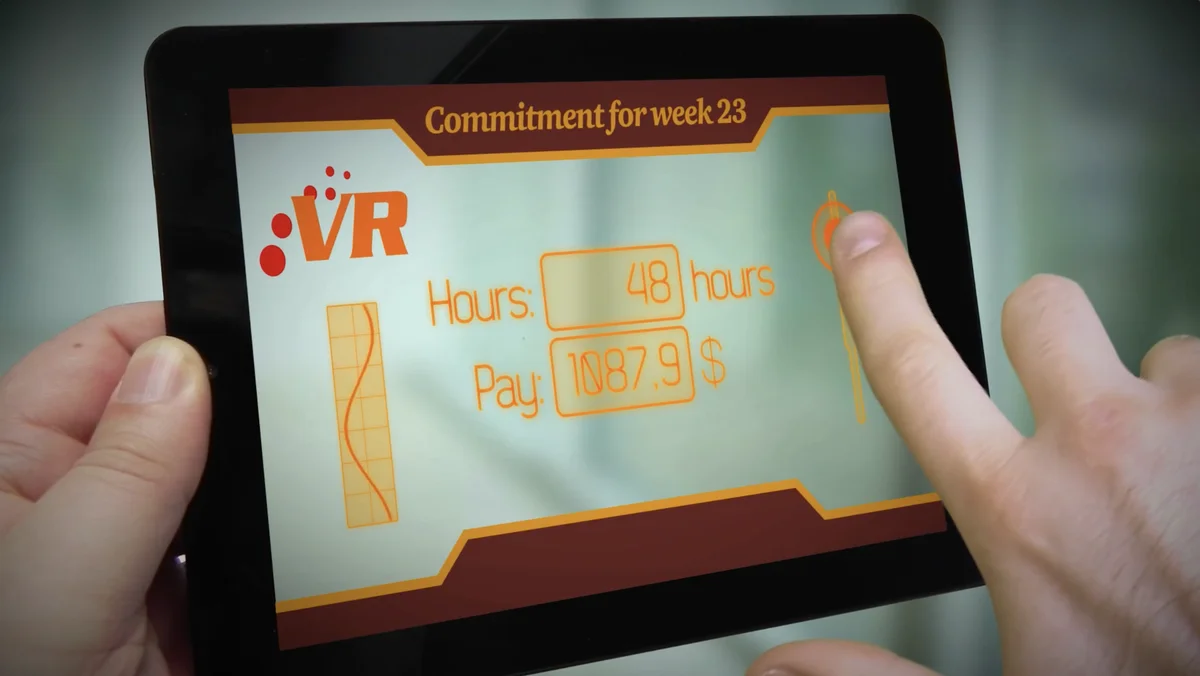
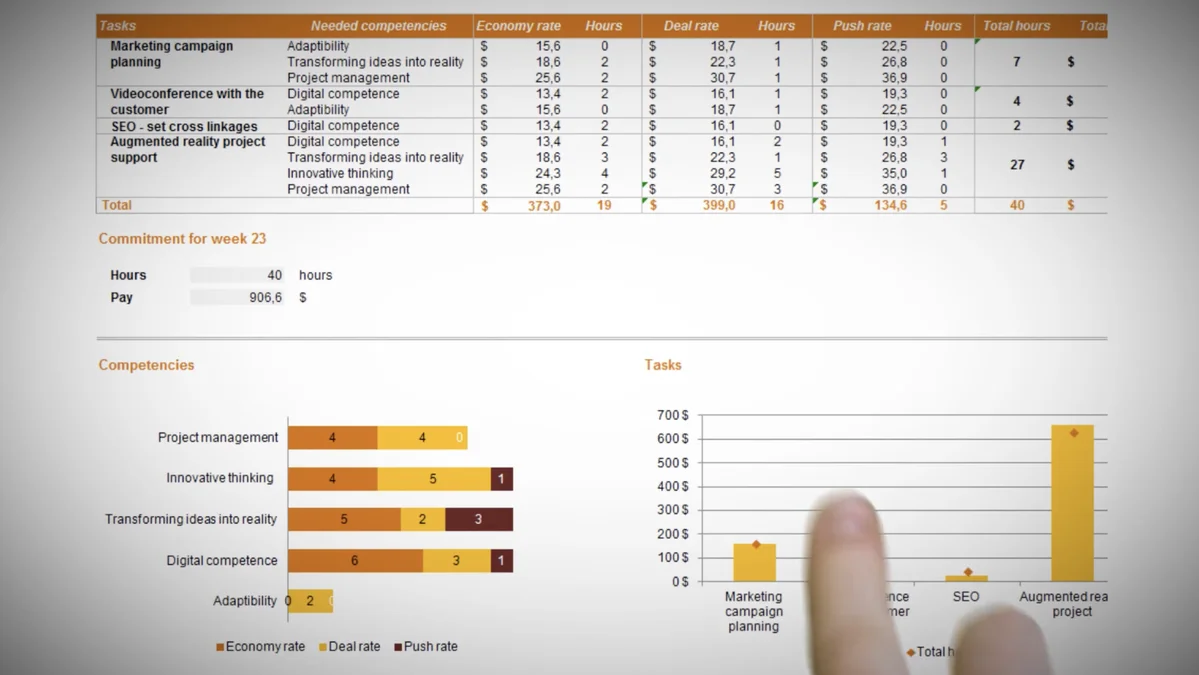
Work breaks into discrete units. A tiered rate system nudges supply and demand as projects heat up or cool down. Performance flows through peer reviews and a points system that can raise someone's effective fee.
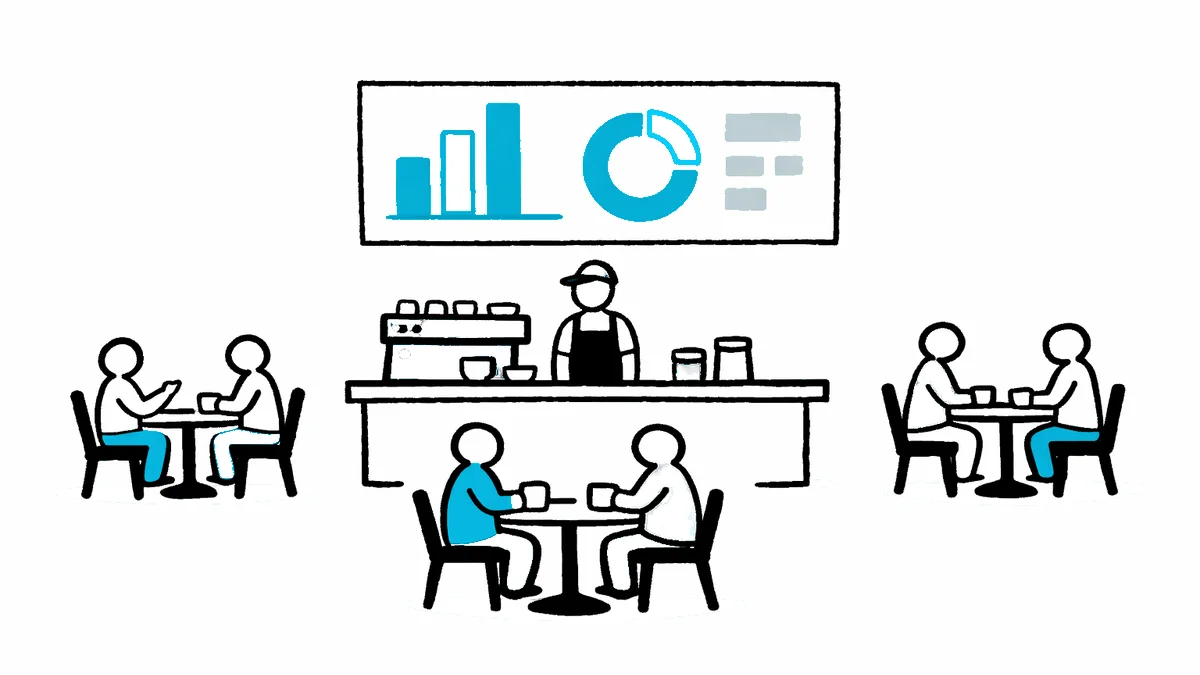
The detail that made it stick for me was physical. Vision Resources sells its real estate portfolio and buys a coffee-shop franchise network called Coffee Library, turning those locations into distributed "cloud offices" for meetings and collaboration.
New talent model needs a new workplace model. If one becomes fluid, so must the other.
Itching to watch it yourself? I’ll share a link at the end, but the backstory is worth hearing first.
A Zsolt of Inspiration
The genius behind Vision Resources is Zsolt Szelecki. At the time, he was a senior People and Change leader at PwC, focused on how emerging shifts in talent, technology, and organizational design might reshape how work gets staffed and delivered.
The video came from “a sleepless night and a pile of half-formed ideas.” He started assembling a model where those ideas reinforced each other rather than sitting in separate buckets. That mix of consulting, operating, and systems thinking is all over the simulation.
The most memorable piece—the coffee-shop move—had a specific origin.
Zsolt had been advising a startup that ran its office in an oddly literal way. By day, it functioned as a loose, collaborative workspace. At night, part of that same space was converted into a restaurant. The operational transition was awkward, he admitted, but the underlying insight stuck: why should a place be locked into a single purpose? Why couldn't "workplace" flex at scale, across time and use cases?
That was the broader point of the simulation. It drew from real practices he had seen, assembled into a coherent story.
After it circulated, clients came asking for pieces rather than the full model. A large tech company in China wanted help building a marketplace where employees could trade skills and capacity across projects. But then the environment shifted, and the project went sideways before full implementation—which is itself a useful data point.
Then Zsolt offered what might be the most useful lens for reading the video in 2026.
Dynamic organizations make mistakes.
In his words, evolution runs on "embracing and learning from mistakes." Leaders who demand perfect, predictable execution get compliance, not bravery.
When we talked about what has aged well, he kept returning to themes that feel newly relevant in the genAI era: trust, the willingness to accept nudges, the tension between efficiency and resilience. The system you design has to leave room for friction, learning, and serendipity.
The hard part was never the algorithm.
It was the humans. And increasingly so.
Café Collaboration
The Coffee Library idea still feels like it was written by a workplace strategist.
Coffee shops hold no magic on their own. What matters is that Vision Resources treats place the way it treats talent: as capacity that can flex.
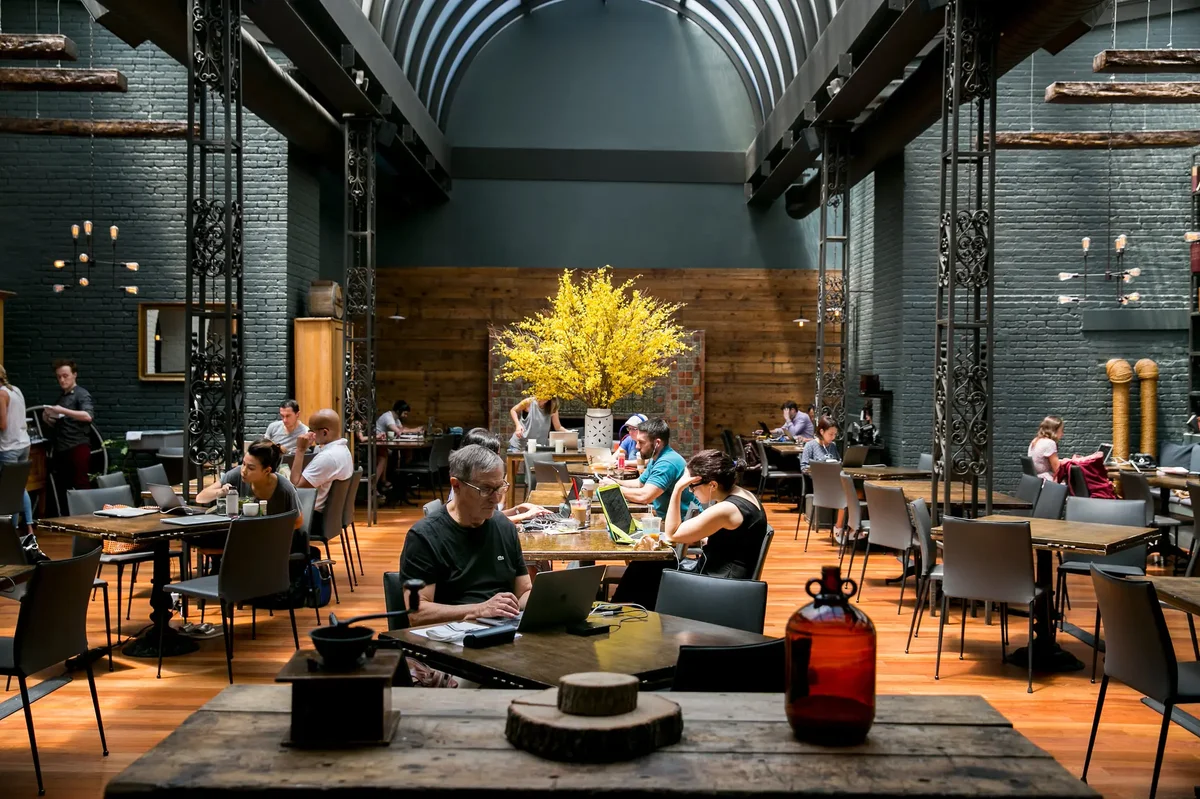
Most "future of work" narratives a decade ago were happy to redesign skills, teams, incentives, and workflows while leaving the office untouched—as if real estate lived on a separate planet. Vision Resources did the opposite, linking the work and workplace.
It took the most rigid thing on the balance sheet and tried to turn it into an on-demand network.
I've written about the workplace purpose trap before: you can build the perfect destination and still end up with an empty building. The Coffee Library is a vivid corrective. If work becomes more project-based and attendance more intentional, the workplace can’t be a single place you either show up to or skip.
We need an ecosystem, not a destination.
From 2013 to 2020 to 2026
The interesting question for 2026 asks which parts are now standard, which remain aspirational, and which collapse under their own incentives.
Skills-based matching and internal talent marketplaces are no longer speculation. Managing workforce capacity dynamically has become core to how progressive organizations staff projects.
The recognition that workplace and workforce strategy are coupled has finally surfaced in the most forward-thinking companies.
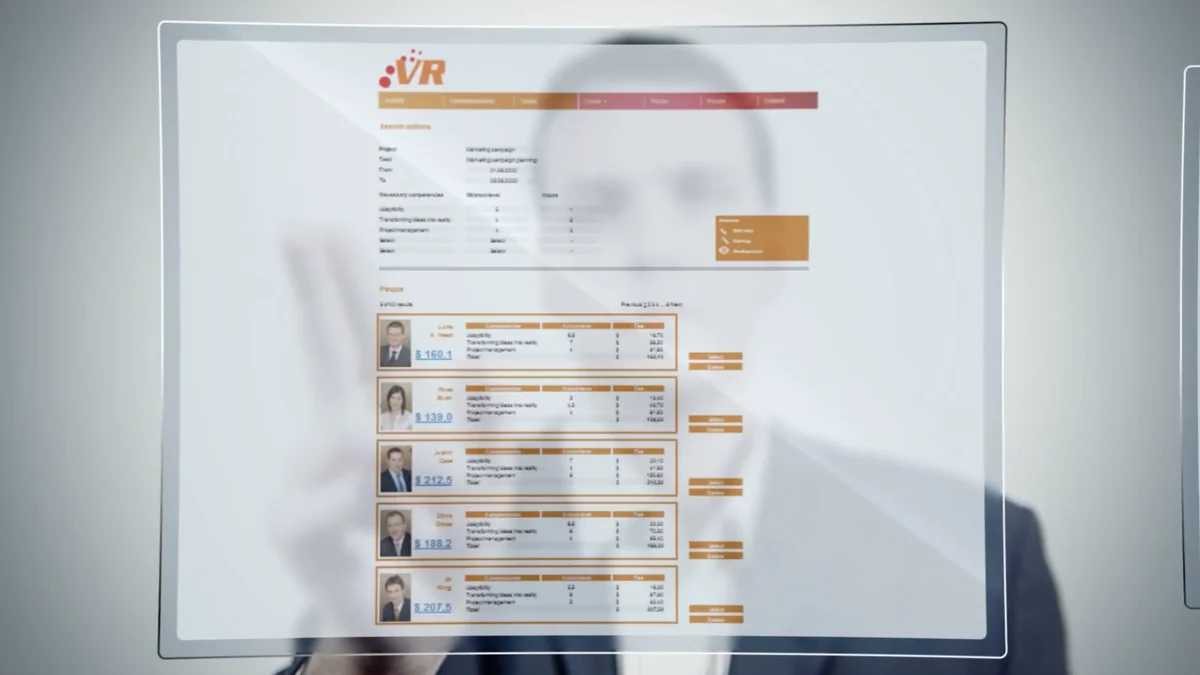
What proved harder: peer reviews and points systems are useful as signals but fragile in practice. Variable rates and pricing nudges can work in bounded contexts but collide fast with internal equity norms. The full model was always light on governance: appeals processes, guardrails, transparency about who loses when the system optimizes for speed.
Boring systems make flexibility feel safe. They were missing from the simulation, and from most real implementations too.
And then there's serendipity which, it turns out, resists engineering.
Zsolt described a large global content company that tested two approaches to colleague connection: a smart algorithm matching people by competencies and interests, versus completely random pairings. The random group produced more innovation.
You cannot schedule the unexpected.
Leaders should openly embrace and celebrate the unexpected if they want to create a system that is more organic and responsive.
Vision Resources + AI
The video's core bet: translate strategy into work units, match them to skills, and keep the system in balance. Generative AI makes that far more feasible. It can decompose work, infer skills from actual work artifacts rather than self-reported profiles, recommend matches, and keep the marketplace updated as priorities shift.
But the same tools that reduce friction can hide decisions.
Zsolt, based on his recent experience working with ONA (Organizational Nework Analytics) approaches and tools, draws a distinction between the two kinds of trust in any system:
- Expertise-based (i.e., "I believe you because you know what you are talking about")
- Relationship-based ("I trust you because we know each other and I think you care")
AI can earn the first kind. The second remains stubbornly human.
A marketplace that feels empowering when transparent can feel coercive when nudges become automated, ratings turn opaque, and someone gets passed over without knowing why.
AI will make new models easier to build, but relationship trust is an entirely different, and less algorithmic problem.
We cannot engineer trust between humans, but we can create the conditions to enable it.
Bring Your Leaders Across the Line
Inspired by what you're reading? Phil's talks and workshops bring a credible, cross-functional perspective to help organizations reimagine and redesign work for better experience and outcomes.
What to do on Monday
The vision was always clearer than the implementation. That's as true today as it was in 2013. Here's where to start.
- Audit your "talent market," even if you don't call it that. Where do people actually get staffed today? Manager or expert networks? Volunteerism? A spreadsheet? Opacity is a baseline problem before it becomes an AI opportunity.
- Define what must be governed before you optimize anything. If you plan to use peer signals, internal matching, or algorithmic nudges, decide now how disputes work, what transparency looks like, and who can override the system. Cut back on over-engineering, the same way smart regulators avoid over-regulation.
- Pressure-test the workplace implication. If your staffing model is becoming more fluid, what is your physical network strategy? One HQ? A few hubs? Partner spaces? The physical and the organizational have to flex together. Build a digital twin for your organization, a safe “sandbox” you can play with new initiatives without bearing all the risks.
And, of course, watch the resurrected Vision Resources video using the form above.
Watch it as a strategist, not a historian.
The gap between what Vision Resources imagined and what your organization has actually built is your real agenda.

Have you seen dynamic talent marketplaces in action? Have they included external resources? Get in touch to let me know!