

Your Employees Are Hacking the Office

The return-to-office debate sadly rages on, forcing employees to make the most of an often undesirable experience. At the same time, leaders are promising workers that vibe-coded AI agents will handle mundane tasks and boost productivity. Finally, our physical workplaces are more wired than ever, with booking systems, smart lighting, and self-service amenities.
Guess what happens when you ask code-capable employees to come to offices they don’t like and use systems that often add unwanted friction? They will vibe code their way to a better day, sometimes at the expense of other people.
And it’s really happening.
During a recent Workline Constellation “office hours” session, a participant shared stories of engineers “hacking” the office software and hardware for their own benefit. I followed up afterwards and got the details.
We discussed how "hacking the office" is rarely malicious. Most cases involve teams trying to boost their own effectiveness, and it doesn’t have to be technical. Ever see a sales team turn a serene library space into a frenetic bullpen? Or a monitor perched on top of paper reams from the supply closet?
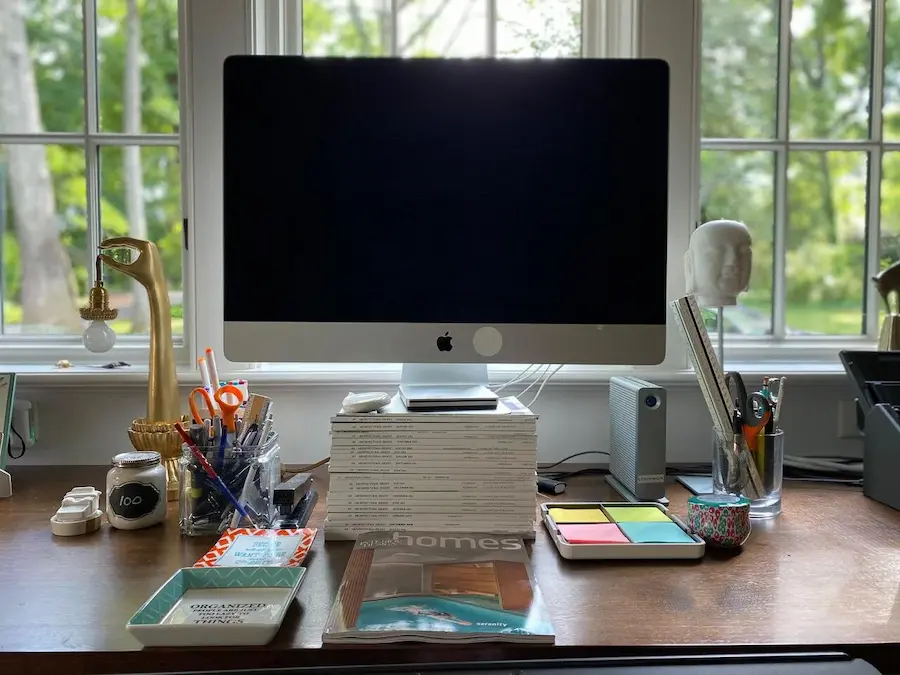
My old boss called this behavior “self-medicating" — employees take ergonomics, productivity, and culture needs into their own hands when choice and configurability are not provided officially.
As organizations encourage employees to be enterprising and autonomous with AI tools, should we not extend that same philosophy to the built environment?
What the Hack!?!
My source—a software company real estate leader who will remain anonymous—shared several examples. Mostly harmless, but some technically violated policy or disadvantaged others.
One engineer wrote a script to automatically book their favorite desk every morning at 12:01am. Another figured out how to reserve specific items from a fresh-food vending machine, denying colleagues the option to buy something right in front of them.
Developers covered daylight-harvesting sensors with compostable cups to keep the lights off, creating a darker environment preferred for coding. They also physically removed a data cable from the intelligent lighting system to provide network access to a device they built to display the operational status of their critical systems.
Out in the parking lot, EV charging stations have been covertly reserved through a third-party system, so they would only activate for one driver. My source also recalled when employee requests for paid parking passes spiked at his previous company, but office attendance did not.
Turns out the local college football stadium was just down the road. Speaking of football, large digital signage and wayfinding screens are common targets for repurposing during big sporting events.
Finally, the system for managing access to mothers’ rooms and meditation rooms—fully private by design—had to be locked down for reasons I shall not name in this PG newsletter.
These examples reveal what people value most—consistency, convenience, environmental preferences, and proximity—and how willing they are cheat for personal advantage.
Vibe Officing 2.0
Imagine if these workarounds were supported rather than banned. What if companies provided APIs for the office? What if teams building bespoke agents to book rooms, change lights, or order food were a feature rather than a bug?
I coined the phrase "Vibe Officing" last year to describe mood-based physical mobility between workspaces. Maybe we should extend the definition to include using personal agents to engage technically with those environments.
If leading organizations encourage AI-powered digital collaboration, why not AI-powered physical coordination? There’s no shortage of workplace tech products selling office magnetism and experience, and some even have APIs. For example, Robin CEO Micah Remley told me that "several customers utilize the API to integrate workplace data into their Intranet to make locating coworkers much easier."
And who better to vibe code the office experience than a vibe coding company?
Jonathan Killeen, Head of Environment at Lovable, said his team built a custom visitor management system entirely on Lovable:
Look, feel, tone, flows, permissions, branding - every detail is uniquely Lovable. If we want to tweak the welcome screen, update the design, add a new step, or ship a totally new experience… we just do it. No waiting, no rigid vendor dashboard, no “that’s not supported.”
That's the office-as-API vision in action. But I don’t yet know any real estate team that lets employees access APIs to write their own workplace experience agents.
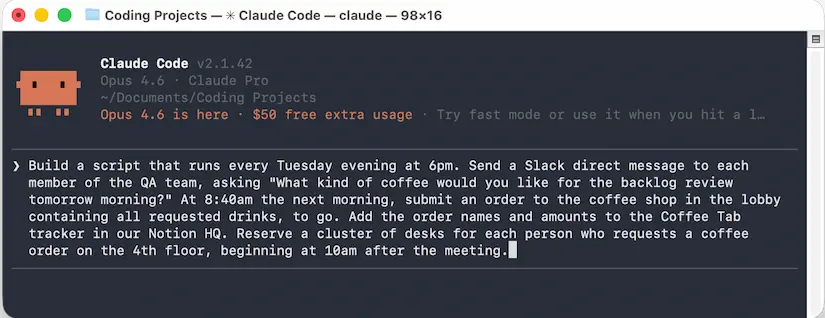
Thinking outside of the box, literally, I can imagine a world where companies provide employees the ability to vibe code spatial experiences both in their own offices and externally.
Preferred conference room not available? Your personal copilot could book a coworking spot near home. WeWork already has a developer portal.
Lessons from The Edge
Even in the future of smart-and-sexy buildings, access and incentives will still inspire some people to take advantage of the system. Just ask Deloitte.
In 2016, they moved into The Edge in Amsterdam, marketed as the world's smartest building at the time. Full of sensors and sophisticated connections, the building’s mobile app allowed employees to book desks based on their schedules, order coffee on the go, and control lights and temperature. The parking garage even recognized their license plates.
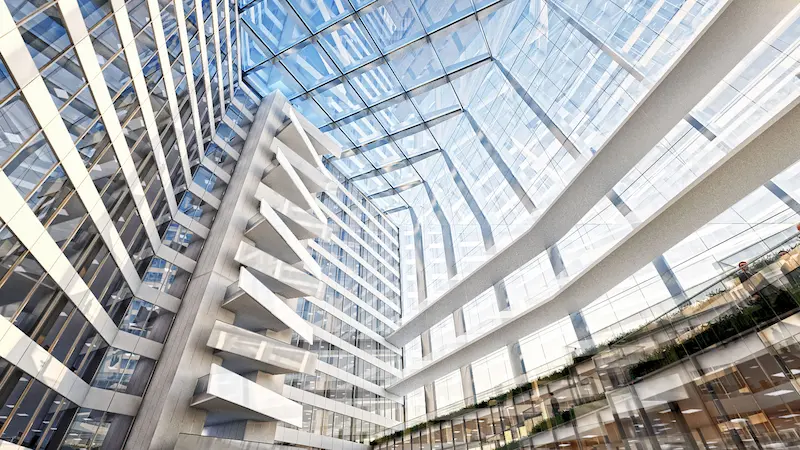
The result? People still gamed it. Some staff booked rooms they had no intention of using, simply because booking triggered parking space reservations.
The solution to office hacking is to provide better infrastructure, but we need to go in with eyes open. Expect gaming, plan for it, design guardrails from the start, and help teams iterate in pursuit of a better experience.
Three Functions, Three Imperatives
For an organization ready to maximize the office vibes, how would CRE, HR, and IT actually make the office-as-API vision work while avoiding The Edge’s mistakes?
Real Estate Leaders
This is already happening underground. Bring it into the light. Lean in, but stay realistic about human nature. Your role involves providing infrastructure AND guardrails, with transparency about who reserves or controls various resources.
I know you also face two additional challenges: historically low access to technical resources (like Drew) in your own teams, and the line between tenants and owners/operators. Office APIs blur this boundary even further, especially in multi-tenant buildings with shared resources.
HR Leaders
Flexibility about where people gather reduces mandate resistance. This approach aligns with fluid teams, project-based work, and cross-functional collaboration. If you're encouraging AI agent use for virtual work, embrace it for physical coordination as well.
You'll still need policies when team preferences conflict, and when gaming creates inequality. The API office requires thinking through fairness and access, not just enablement.
Technology Leaders
Code-savvy employees are both the greatest offenders and design partners. But security and fairness show up more in the build world. Lockdown creates shadow operations, but naive openness creates chaos. Real estate needs IT partnership for both enablement and guardrails.
Lead the conversation about which systems get APIs, what limits apply, and what override capabilities facilities teams retain. This represents the physical extension of what you're already doing with digital collaboration platforms (e.g., Slack, Jira, GitHub), whose open ecosystems already encourage custom integrations.
Bring Your Leaders Across the Line
Inspired by what you're reading? Phil's talks and workshops bring a credible, cross-functional perspective to help organizations reimagine and redesign work for better experience and outcomes.
What Can You Do on Monday?
Start by mapping what employees are already hacking, and don’t kill the vibe by punishing them for trying to make the most of being in the office. These behaviors reveal both preferences and gaming patterns.
Try asking your youngest and most digitally native employees what they’d control or create in the office environment if they could vibe code their way to a better day.
Convene real estate, HR, and IT to discuss the downside scenarios. If we enable this, what could go wrong? For real estate specifically, talk to your landlord or property manager about API access to building systems before employees force the issue. Or ask your existing workplace tech vendors how best to start playing with theirs.
Identify one pilot with built-in guardrails. Maybe it's a desk booking API with rate limits and transparency. Test the concept, learn from the gaming behaviors that emerge, and iterate.
Most importantly, start treating workarounds as feature requests while designing against hoarding. The employees who write scripts to book a favorite desk are telling you something valuable about what makes the office worth visiting.

If your employees could control your office from software they write, what would they do? Get in touch to let me know if you have seen this in action!