
Stop Guessing Where the Chicken Is
I once wrote about a panel of experts at a conference who fell silent when I asked how they align employee experience initiatives to business objectives.
"The silence is deafening," I said across the crowd at the event.
That pause revealed something uncomfortable: we’re fluent in engagement stories, but struggle to connect employee experience to revenue, retention, or productivity.
I recently interviewed Josh Newman, who was then the Global Head of People Strategy & Experience at WPP, about how he has tackled that problem. His answer surprised me because it was so simple:
"We embarked on a journey to understand what the hell people do on a day-to-day basis. We wanted to understand the work architecture of our people."

I loved the phrase "work architecture,” where Josh meant the repeatable tasks, workflows, and handoffs that actually produce outcomes, independent of boxes and lines. Most organizations obsess over org charts, job titles, and reporting structures. Very few design the work.
Josh and his team could draw a clearer line from EX initiatives to business outcomes because of their curiosity about the work over worker preferences. That quality separates EX as theater from EX as strategy.
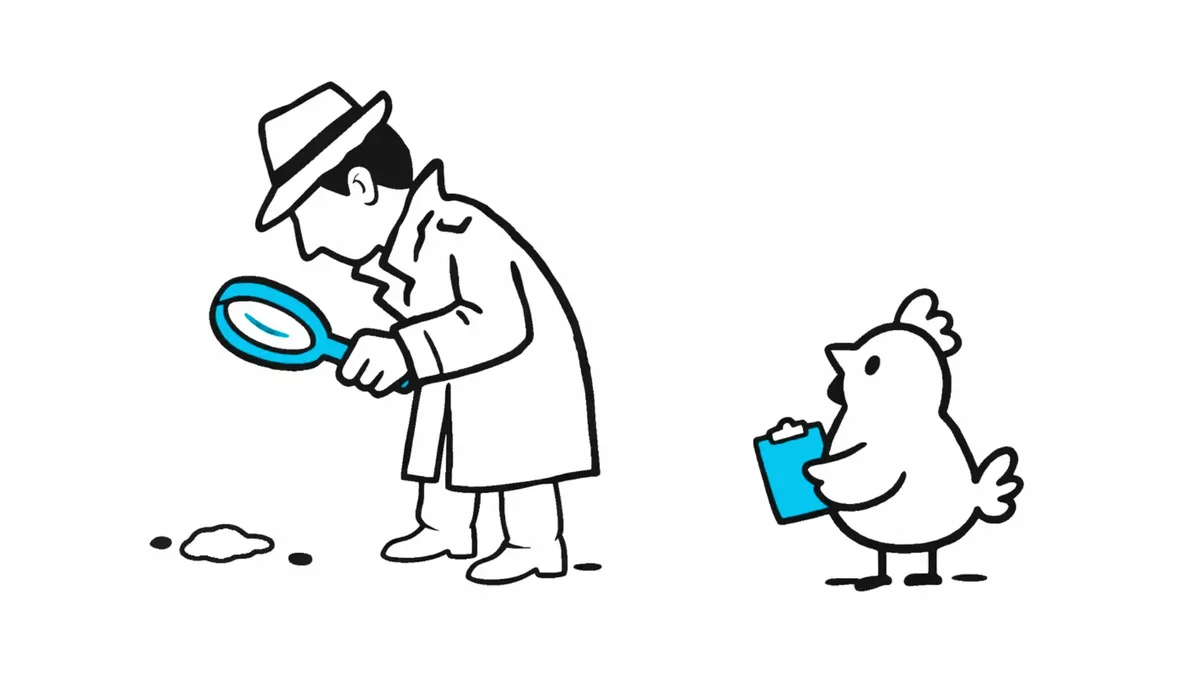
Follow the Chicken
Guatemalan chicken chain Pollo Campero recently “mapped how workers were moving around stores and revamped its restaurant design to allow people to work more efficiently"—a simple example of aligning around outcomes through human-centered design.

Thinking back to his time at Walmart, Josh said, “A company with highly-scaled, consistent roles is likely further along in understanding the work that people do at the level I’m talking about. But, with knowledge workers, it’s a completely different ballgame.”
Most knowledge work organizations are still guessing where the chicken should be.
At WPP, Josh's team identified over 50,000 unique job titles among 110,000 employees, or two people per title. You can't measure whether EX initiatives enable the work that matters when you don't know who does what.
Over three years, Josh and his team used a work architecture framework—what work drives outcomes, what tasks accomplish the work, and who performs the task—to whittle 50,000 titles down to 600 roles representing ~80% of the organization. Here’s a podcast with the whole story.
"Skills architecture is secondary," Josh explained. "You need work architecture first."
This flips the traditional HR approach on its head. Without that sequence, skills become an inventory exercise rather than a performance lever. Josh started with the work itself, then figured out who could do it and how they might need to grow.
Curiosity and Colocation
Most leaders ask surface-level questions: Are people engaged? Are they in the office?
Data-curious leaders ask: What work drives our revenue? What workflows enable that work? What signals tell us if it's working? They apply the scientific method to EX.
The distinction matters because the first set measures satisfaction. The second measures organizational capability. Josh shared an example that illustrates the difference.
WPP recently experimented with colocating cross-functional account leaders who had historically sat with their individual agency teams. These leaders leverage resources across the organization to serve major clients, but legacy seating norms reinforce agency silos rather than foster cross-agency collaboration.
Moving people together is an experiment. You know when you did it. You can measure signals to see if it worked (e.g., financial performance, collaboration patterns, knowledge sharing), and adjust if it didn’t.
As Josh put it during our conversation:
"We need to talk about the intersection of human flow in space, technology at various moments within the flow, manager interaction points, the communication, the narrative, and marketing of it all."
Seeing how spatial decisions connect to workflow, technology, and culture holistically is what most organizations miss.
As work becomes more fluid, with people moving between projects based on skills rather than fixed hierarchies, spatial experiments become more important, not less.
Work architecture reveals where fluidity is possible. Data curiosity helps design the gathering that enables it.
From Art to Science
When EX emerged as a discipline, the promise was integration: HR, IT, and CRE collaborating to design holistic experiences serving both people and business outcomes. Instead, Josh reminded me, EX got stuck as an art—built on engagement surveys, focus groups, and executive preferences rather than work-level understanding.
The shift to science requires a different approach. Form a hypothesis, like I suggested in my panel-silencing article:
If we improve [specific employee experience], we expect to see [specific business outcome] because [logical connection].
Then design interventions, measure against business signals, and iterate with evidence.
Josh described the mindset shift this way: "If we understand the steps it takes to get to an outcome, we can then understand who is best wired to successfully perform those steps." That clarity transforms EX from guesswork into design.
Most EX initiatives skip the hypothesis step entirely, implement programs based on best practices, and measure success through sentiment rather than business impact.
Since our interview, Josh joined ServiceNow (with my friends from UNLEASH) as VP of Workforce Skills & Talent Readiness. In announcing the role, he described "building the clarity, architecture, and pathways that enable everyone across our ecosystem to grow and thrive."
That language—clarity, architecture, pathways—defines the evolution from art to science.
Who Owns the Lab?
Want to be an EX scientist? You need a lab. But here's the challenge: EX-related data exists across organizational silos, and it's rarely integrated.
In sophisticated organizations, HR owns work architecture data, IT owns collaboration patterns, and Real Estate owns movement data. Each function runs separate experiments without sharing findings, while episodic distractions—outages, weather events, comp cycles—steal energy from curiosity.
Even at WPP, where Josh's team built sophisticated work architecture data, integrating insights across HR, IT, and real estate required constant effort. This is why the panel stayed silent when I asked about connecting EX to business objectives. Each function owns a piece of the puzzle, but no one is accountable for assembling the full picture.
The solution requires both structural change (someone needs authority to integrate across functions) and cultural change (leaders must value curiosity about work above certainty about preferences). This is the Chief of Work imperative.
Before coordinating the work, coordinate the narrative. HR, IT, and real estate leaders should literally use the same opening slide in executive presentations. Fragmented stories about engagement, utilization, and adoption prevent coherent investment decisions.

Data curiosity creates the shared language needed for integration.
Bring Your Leaders Across the Line
Inspired by what you're reading? Phil's talks and workshops bring a credible, cross-functional perspective to help organizations reimagine and redesign work for better experience and outcomes.
What Curious Leaders Do Monday
You don't need to map 50,000 job titles to start developing data curiosity. You need to ask better questions.
- Start with outcomes rather than inputs. What work drives 80% of your organizational value? Not what jobs exist on the org chart, but what actual work moves the business forward.
- Identify one low-risk intervention. If capital and politics weren't constraints, what would you test? Maybe it's colocating a specific group, changing how projects get staffed, or redesigning how new hires experience their first 90 days.
- Define success before you act. What signals would prove you're right or wrong? Be specific. "Improved engagement" is not a signal. "Reduced time-to-first-sale for new account executives" is a signal.
The shift from art to science requires discipline and permission to experiment. Spatial tests, workflow changes, and capability-building interventions can be low-cost and low-risk when you're curious enough to measure what actually happens rather than defending what you assumed would happen.
The chicken is out there. You have to be curious enough to look.

Which question would unlock the most insight about work in your organization? What experiment could you run this quarter if you had permission? Let me know what you discover.