

The Relocation Vocation
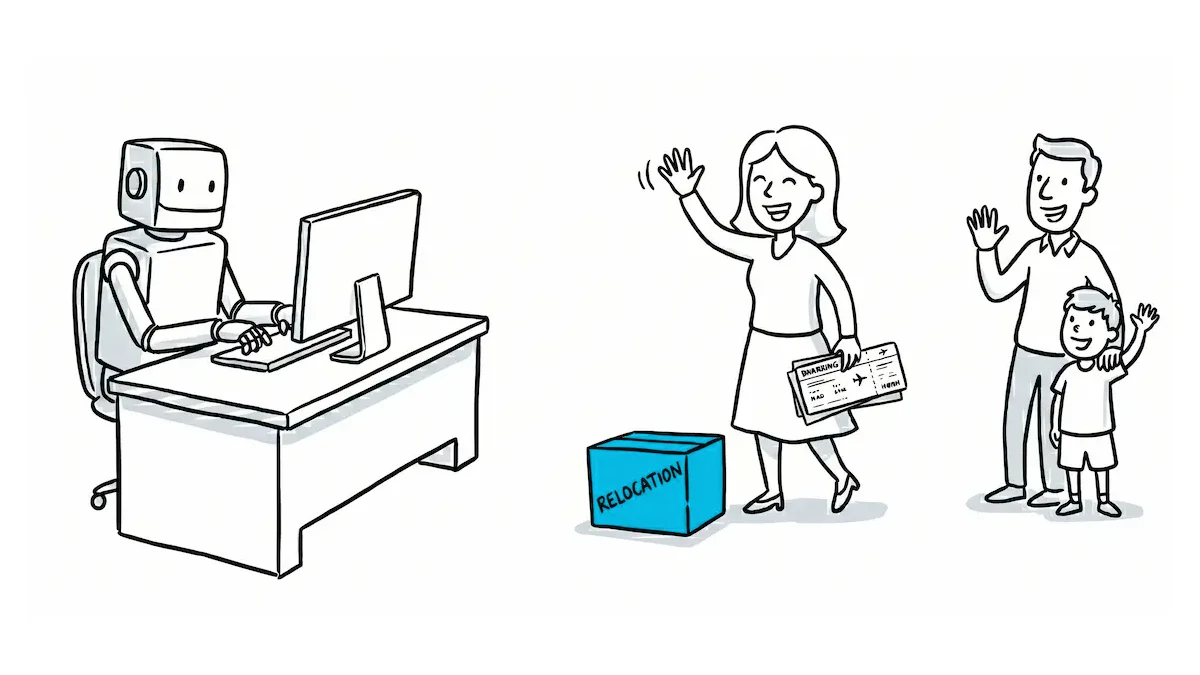
My first job out of college came with a generous offer to “relocate” me closer to my future office in NYC… which was, conveniently, a short subway ride from my childhood home. Last week, I found myself on stage talking about AI and talent mobility at an event hosted by the very same company that moved me home almost 25 years ago.
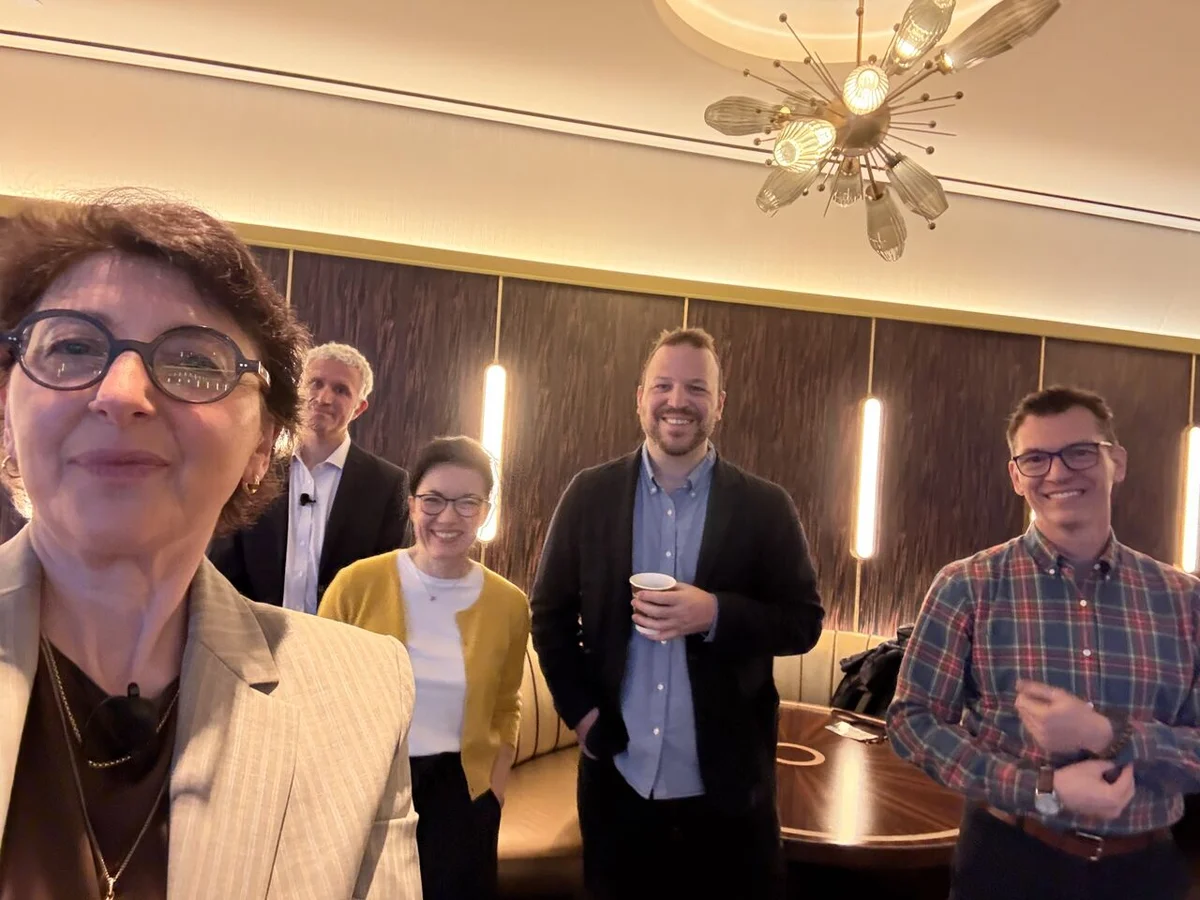
In addition to my post-college move, I’ve taken assignments in London and Singapore, supported nearshoring initiatives seeded with leaders from across the country, and fought an H-1B visa transfer denial for a direct report. I therefore thought I knew what to expect when co-moderating a panel at relocation leader Graebel’s insideMOBILITY, alongside Workathon founder and session co-chair, Julia Hobsbawm.

But I was wrong.
First, our panelists — Nick Lichtenberg of Fortune, Yvonne Wientzek of EY, and Jeff Dybdahl of Amazon — taught me that Mobility and Immigration is far more interesting than I realized. Second, a revolving set of audience members joined us on stage to push the conversation deeper. They sat in “the empty chair,” a concept we borrowed from management guru Charles Handy.
I've been underselling the Mobility function for years, and it will be far more relevant in the AI-powered future of work.
Reserved for VIPs
Many employees file mobility and far-flung assignments alongside executive coaching or first-class. They’re perks for senior leaders, maybe tied to a promotion. The plans we hear at their leaving drinks sound exciting but elusive.
The work to make these moves happen stays mostly invisible. Homes may be sold, visas secured, and new schools identified for kids. The output feels administrative, even when the act of being relocated is intensely personal.
So the Mobility function can feel unseen, both because of the limited audience and because it can be organizationally homeless — just like corporate real estate. Mobility can be aligned with multiple HR teams (e.g., Talent or Total Rewards), as well as Legal, Procurement, or Corporate Services. The mandate is usually anchored in cost and compliance.
Both assumptions are about to age badly.
Mobility is Humanity
Julia opened the panel by asking Nick to comment on the state of AI and its impact on jobs. I then asked Jeff to share how AI is changing employers' thinking about talent and location.
But, slightly nervous and clearly inspired by Nick’s anecdotes, Jeff instead talked about what AI was changing for his team. The biggest shift, he said, was the amount of time they could now spend with the employees they were relocating.
The whole room loved him for it.
Jeff described the work behind the logistics, which could include helping source new schools for kids with unique learning needs, shipping pets, and selling homes. On top of immigration, tax equalization, and helping the moving employee’s partner find a new role.
Every detail of that work is intensely personal. Yvonne said this dynamic has led EY’s Mobility team to relax some transfer-related expense policies to better support internal clients.
By the end of the hour, I had a different mental model of what Mobility teams actually do. The work product is attention to some of the most consequential moments in an employee’s life. The function exists to hold a personal ecosystem together while work moves to a new city.
If this isn’t “leading across the lines of modern work,” I don’t know what is.
Bring Your Leaders Across the Line
Inspired by what you're reading? Phil's talks and workshops bring a credible, cross-functional perspective to help organizations reimagine and redesign work for better experience and outcomes.
Expanding the Definition
Mobility teams handle a senior international transfer the way that meetings and events teams handle a four-day offsite: with logistics and care for the personal stakes. The activities we most associate with "Mobility" formally may have visas attached, but the work pattern shows up wherever a company physically moves people.
In my case, that could include a year-long London assignment, a three-week trip to Singapore, and changing desks on the same floor after lunch.
I called this “opportunity flexibility” in Vibe Officing, arguing that a culture of workplace mobility signals you're defined by skills rather than your seat or home office building.
Dropbox's Offsite Planning Team is doing Mobility work without calling it that. Atlassian's Intentional Team Gatherings are too.
The expertise spans different functions because most companies were organized for international transfers long before they were organized for distributed work.
Putting AI in the Loop
During the panel discussion, I shared my newfound distaste for the phrase “human in the loop,” as it dilutes our agency and ability to control when and why we use AI.
Graebel's research found that Mobility professionals spend 82% of their time on coordination and administration. Their future vision is to spend 96% of that time on proactive, strategic work.
AI is about to close that gap, whether the industry is ready or not. Visa filings, expense reconciliation, vendor coordination, document chasing — the work that fills a Mobility coordinator's day is exactly the work generative AI was built to compress.
The freed time has somewhere obvious to go. Graebel's own Catalyst service focuses on arrival, onboarding, and immersion for executives who move. The same instinct built into Experience Tulsa, only here it's an employer's Mobility team and their vendor partner doing the integration work.
That is the work Mobility leaders would rather be doing. AI is the lever that finally lets them.
More Moves on the Horizon
As AI takes on more of the routine cognitive work, what's left is what AI cannot do alone: hard conversations, high-stakes meetings, the bets that need a room.
The relevance of moving humans to the work rises as the work shifts toward what's uniquely human. The Jevons Paradox also implies that as AI reduces the administrative burden of moving people, demand will rise. This is why we still have travel agents.
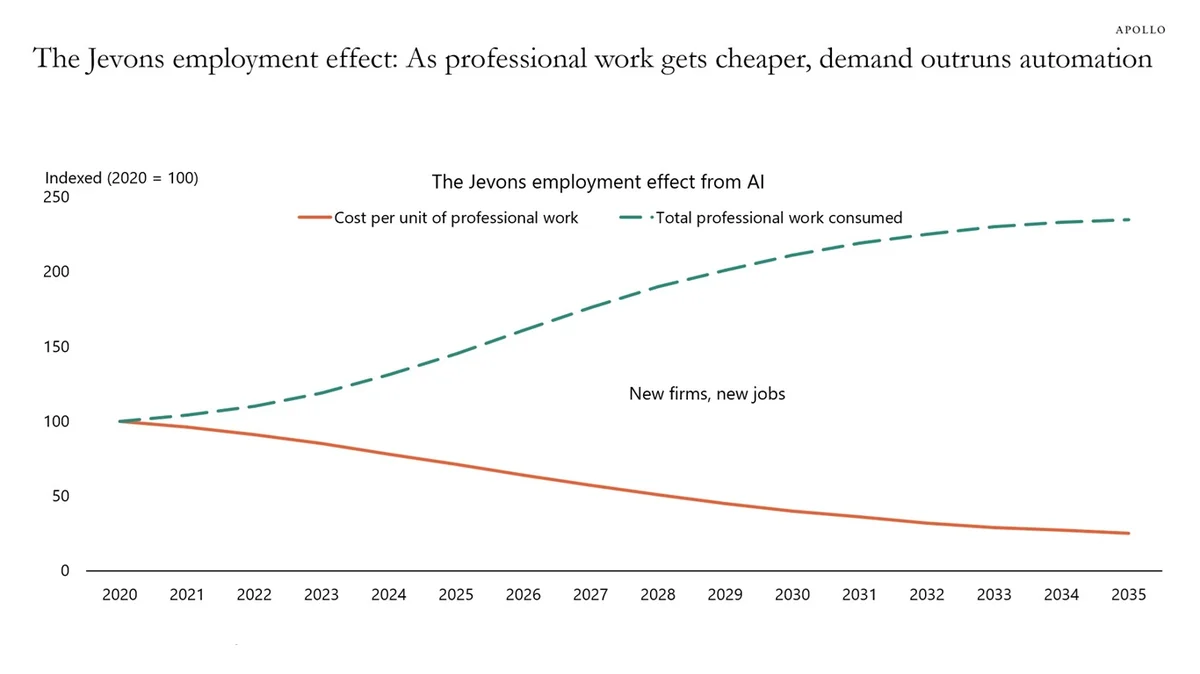
External pressures stack on top.
Geopolitics causes companies to relocate employees out of regions in conflict, often on short notice. Then there's immigration policy; visa fees rise and caps tighten. Companies that used to plan a transfer once may now plan it three times because the rules shifted underneath them.
In response to cultural acceptance of remote work, digital nomad visas have proliferated since 2020. Cities around the world are offering their own incentives. The worker shopping for a home base has options beyond employers. Even companies that demand in-office presence are accelerating relocations; Jeff said Amazon moves up to 30% of new hires in some areas.
Volume is rising, and reasons are multiplying. Mobility needs a bigger mandate.
Stop Drowning in Busywork — Lead With AI!
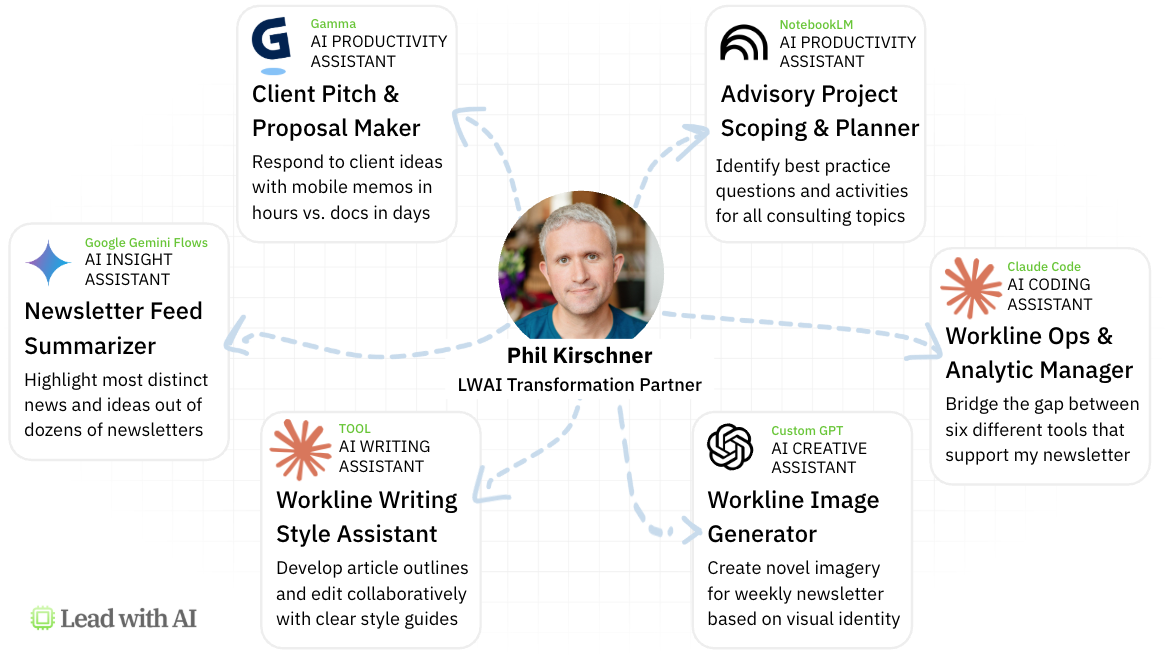
Most leaders know AI should save them time, but don’t know where to start. AI Leader Advanced is a build-as-you-learn course for which I’m a facilitator. Learn alongside peers, receive personalized coaching, and build 6 personalized AI assistants in just two weeks. Thirty minutes per day, no code required.
Objectively Mobile
Imagine a function whose mandate is talent mobility and location resilience. One leader, one charter, one set of metrics.
Inside it: mobility and immigration, gatherings and offsites, meetings and events, and workplace strategy and change. Each currently holds a piece of the same question — how do we put the right humans in the right place at the right time — and reports to a different boss with different KPIs.
Imagine location as an organizational capability rather than a coordination tax. Companies that move fast on conflict, visas, project surges, and cultural moments win the talent. Companies that move slowly lag.
This is yet another way to treat work like a product, with a feature designed for mobility.
The empty chair was our way of making mobility a feature of the panel.

What Can You Do on Monday?
Mobility teams are logistics machines hiding a deeply human mandate. The work to expand their impact on employee experience has to start before AI forces the issue.
Here are three places to start:
- Find your mobility team and ask what they actually do. Most leaders cannot name the function's reporting line, its annual volume, or the personal stakes it manages weekly. Twenty minutes with the team lead is the cheapest education available.
- Pressure-test one upcoming move. Pick a relocation, an offsite, or a quarterly gathering already on the calendar. Ask which functions are touching it, what each one optimizes for, and what's falling through the seams.
- Name a single owner for location resilience. Even informally. The first person to hold the question — who moves where, when, and how well do we do it — across the four functions becomes the prototype for the role that's coming.
The right humans, in the right place, at the right time. The companies that build the function to deliver it get the talent that's about to be in motion.

How might unifying your organization's fragmented approach to talent mobility and location strategy unlock capabilities that currently hide in the gaps between disconnected functions? If this resonates with your work, get in touch.