

Is Time On Your Side?
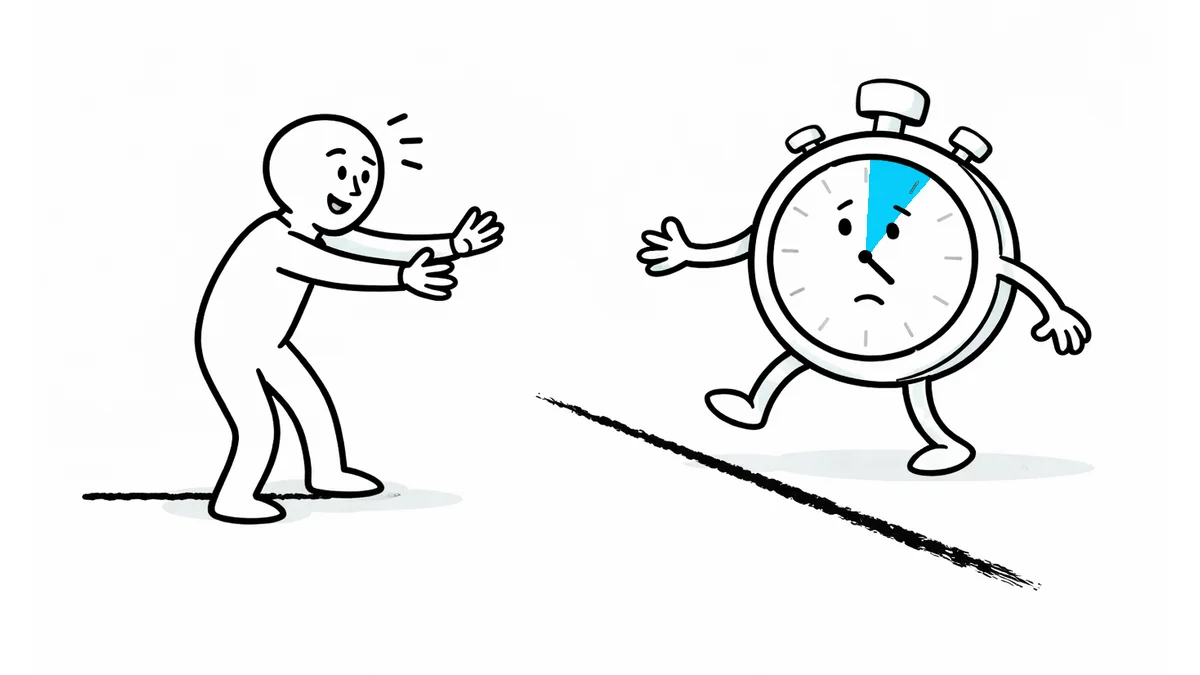
The 1964 song “Time is On My Side” by Irma Thomas, famously covered by The Rolling Stones, has a confident refrain by the narrator that time will do the work for them. That the person they love who is out chasing something, burning through their reserves, will eventually come running back. All they have to do is wait.
We've been applying that logic to AI transformation.
Deploy the tools. Save the hours. Trust that recovered time finds something worthy to do. The productivity gains will arrive.
But the data disagrees.
Time is a Benefit
I spoke at an executive HR forum last week, hosted by Ashley Reid, CEO of Wellist. The room was mostly senior people leaders in healthcare and/or total rewards and benefits, working through real questions about AI ROI and what it should look like in their functions.
The conversation kept arriving at the same word: Time.
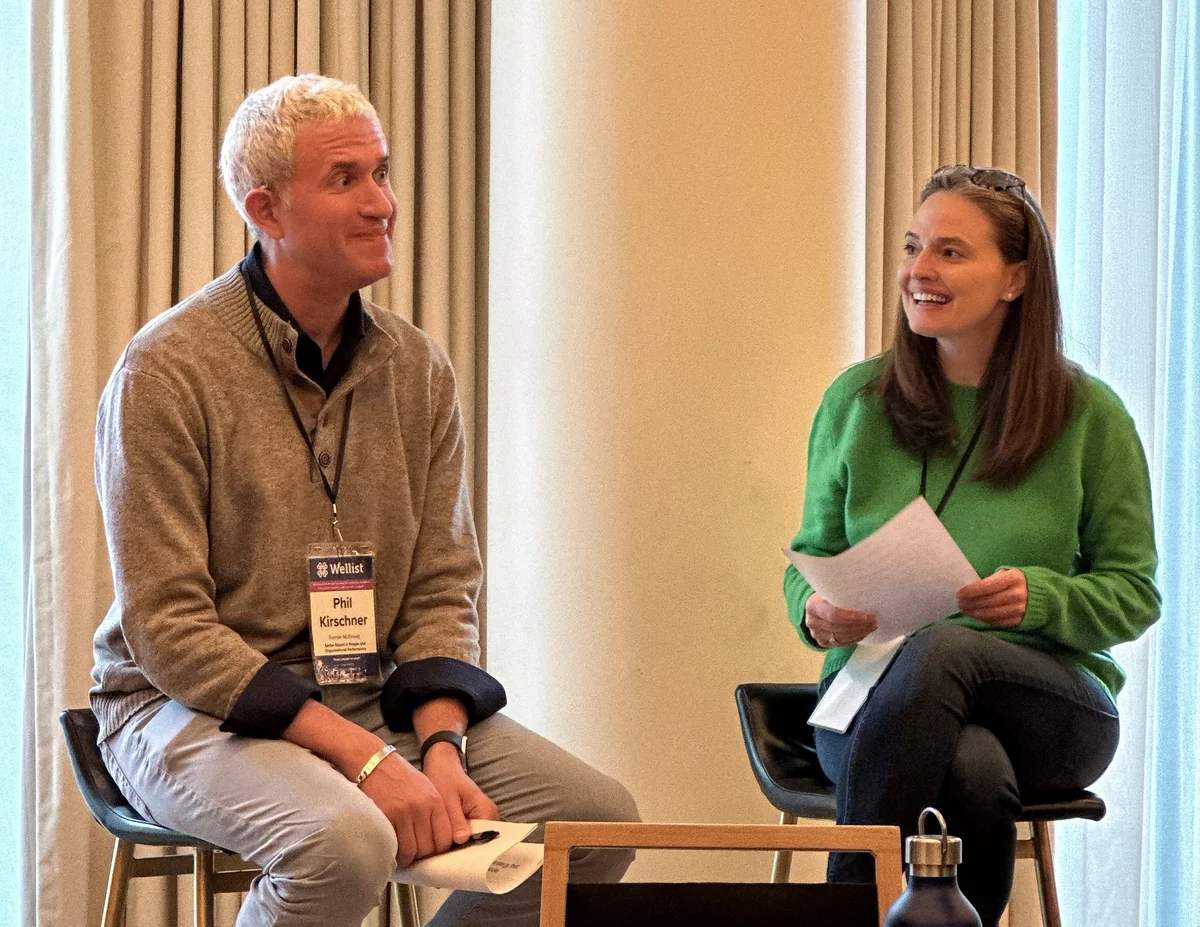
Specifically: what do we plan to do with it?
That question has a precedent in Wellist's own mission. Their core finding: three out of four employees never use the resources their employers pay for. Mental health support, care navigation, and financial counseling — available, mostly untouched. The mismatch between what employers provide and what employees actually need, at the right moment and in the right form, is exactly the problem Wellist was built to solve. They exist because availability and access are not the same.
Organizations are deploying AI at scale. One study tracking 443 million hours of work activity found adoption surged from 53% to 80% in a single year. The time savings exist in theory. But like that unaccessed benefits package, recovered time goes somewhere nobody designed: back into the deliverable pile, into more meetings, into the coordination overhead that grew alongside the tools meant to reduce it.
Saved time, like a good benefits program, needs an activation layer. And right now, most organizations have neither.
We Automated on Top of the Work
A March 2026 NBER/Duke CFO Survey found that workers using AI tools report time spent on certain tasks increased by up to 346%. Increased! Why? Because organizations deployed technology without redesigning work. The AI landed on top of existing workflows and added steps: re-prompting, verifying outputs, and managing coordination across parallel AI-assisted processes now running simultaneously.
Jason Averbook, who writes on digital HR strategy, describes this as “the gap between adoption and embodiment.” Adoption is when the tool gets installed and the announcement goes out. Embodiment is when the way people think about the work actually changes. Workflows change. Judgment about what's worth doing changes. Most organizations are still in the adoption phase, measuring license utilization and calling it progress.
The AI Transformation 100 report cites Alexandre Guilbault, VP of AI at TELUS, saying that using AI to save an employee three hours on a report doesn't ensure those hours benefit the company. It often just means more time at the coffee machine. Or more time with the next deliverable that moved up in the queue.
Time without a destination is entropy.
Saved Time Needs an Address
At Charter’s AI Summit, Affirm’s CHRO said 950 engineers paused work for a full week, with standard deliverables on hold, to learn agentic tools together. Expensive on any quarterly report. But asking people to redesign how they work while simultaneously demanding full output risks burnout, errors, and productivity loss. The recovery has to be protected before it can be reinvested. That protection has to come from the top.
Antony Slumbers, who writes about AI's impacts in real estate, describes an intentional alternative: a building manager spending 80% of their time on judgment-layer work rather than the 40% possible before AI handled the rest.
That shift is a designed outcome. It requires someone to formally name what the human layer is for, then protect it from being backfilled.
Michael Pfeffer, Chief Information and Digital Officer at Stanford Health Care, posited that AI can predict which hospital patients will be no-shows. Management could use that data to double-book the slot, optimizing throughput, or use it to proactively arrange a ride for an at-risk patient.
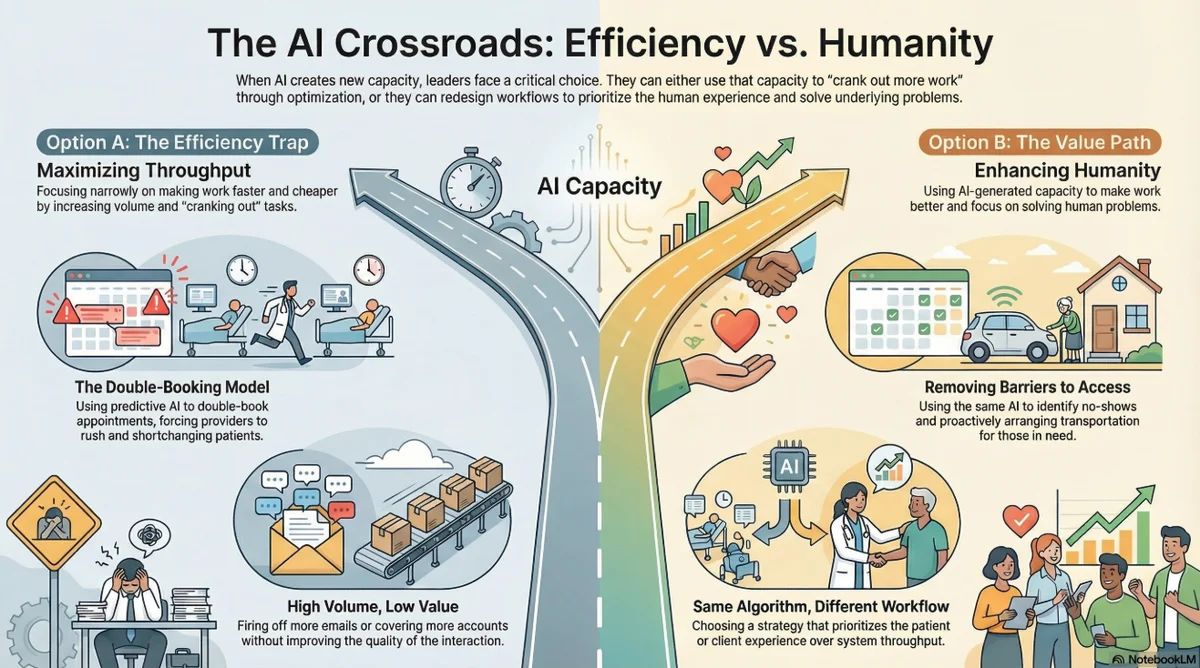
Same algorithm. Two entirely different choices downstream. The payback depends on the human governance decision that follows the AI handoff.
The decision about where recovered time goes is always a human call. Don’t let it be an afterthought.
“Winging it is for the birds,” Kelly CEO Chris Layden said recently.
Designing the Second Half
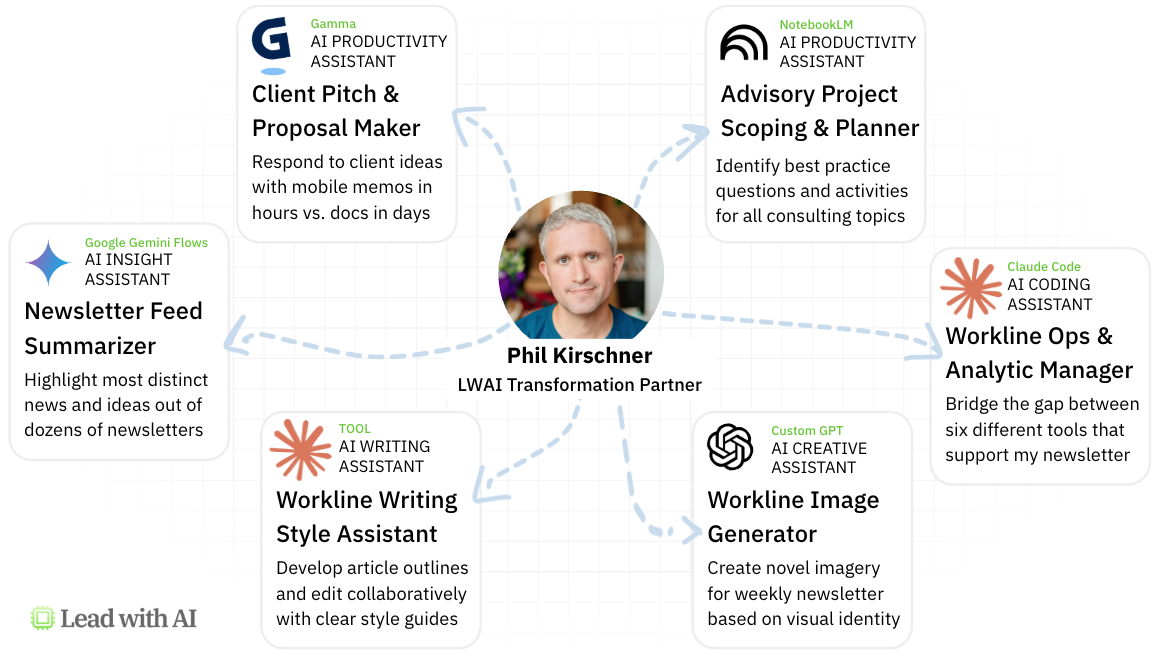
I am currently facilitating a cohort of the AI Leader Advanced program from Lead With AI, a two-week course designed for leaders who want to integrate AI into their real workflows rather than just talk about it. Thirty minutes a day, six AI assistants, material time recovered in workflows that matter to each participant.
What I find notable about the program's design is that it forces the question I’m dancing around here. Once you have the time back, what are you doing with it? The leaders going through the cohort build the assistants. They also have to decide what they value enough to protect or increase with time saved by those assistants.
The BIG Question: When AI Frees Up 20-50% of Your Time, What Will You Spend it On?
That second part is harder. Most leaders have never been asked to answer it explicitly.
The song’s narrator wins because they know exactly what they’re waiting for. The confidence comes from a clear intention, not from patience alone. Most organizations are waiting and skipping the intention. They believe, roughly, that time is on their side. That the tools will deliver. That something valuable will happen in the space AI creates.
The space will get created.
What fills space is a design decision, and right now most organizations leave it blank.
Wellist's mission is matching employees to the right resource at the right moment, because availability requires navigation to become access. The same principle applies to what AI makes available. Recovered time without design is a vacancy.
And vacancies fill fast.
Stop Drowning in Busywork — Lead With AI!
Most leaders know AI should save them time, but don't know where to start. AI Leader Advanced is a build-as-you-learn course for which I'm a facilitator. Learn alongside peers, receive personalized coaching, and build 6 personalized AI assistants in just two weeks. Thirty minutes per day, no code required.
What Can You Do on Monday?
The AI ROI numbers keep falling short because organizations measure the tool output and ignore the potential of future capacity. Here's where to start.
- Diagnose before celebrating time savings. Before your next team meeting, ask people directly: has AI made your week shorter, or just different? If the honest answer is "different," or worse, "longer," you have a workflow design problem, not a technology problem. The tool is working. The work structure needs to catch up.
- Name what recovered time is for, then protect it on the calendar. Pick one category of higher-value work your team consistently says it has no time for: strategic thinking, relationship-building, intervention design, whatever the real answer is for your context. Formally designate a portion of AI-recovered time toward it and treat it as a commitment, not an aspiration.
- Go first, visibly. Identify three ways you are personally using AI in your own work right now. Not your team. You. Then, in your next leadership meeting, share what's working and where it's falling short. The assumption that time will sort itself out persists partly because leaders model it. Showing what you're doing with recovered time is more useful than any policy you'll write about it.
Time is on your side.
But only if you decide what for.

What will you actually do with the hours your organization reclaims from AI, and who will you need to involve to make sure that time serves your people rather than just your productivity metrics? Get in touch if you're not sure.