

Have You Let Go of the Office?
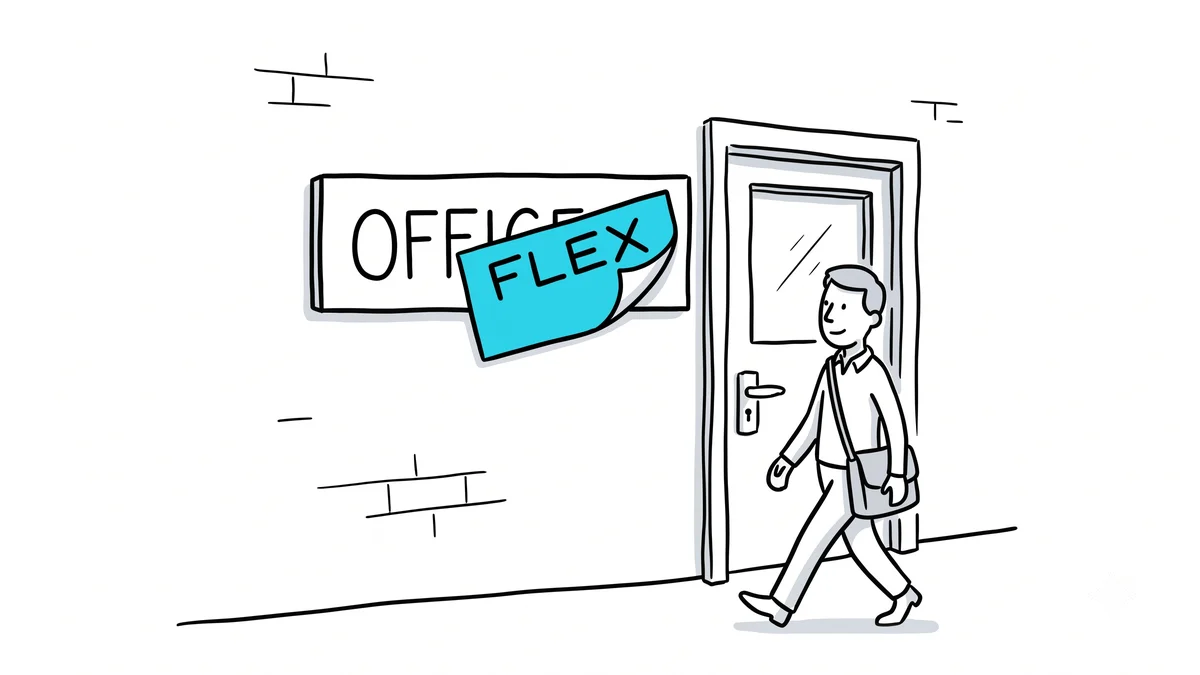
A few weeks ago, I asked whether you had let go yet. The context was AI with a trapeze metaphor: reaching for a new capability with one hand while keeping a grip on the operating model that made the old one work.
Real estate is the older and more expensive version of that problem. Teams may decide week to week where and how they work, but large companies still sign 5-20 year leases.
At the GCUC 50 conference in New York, I sat down with Caleb Parker to record an episode of the Brave Ideas podcast in front of a live room. He asked me a question about what buildings are worth: when a large enterprise takes up a large block of space in a flex building, does that increase the asset's value?
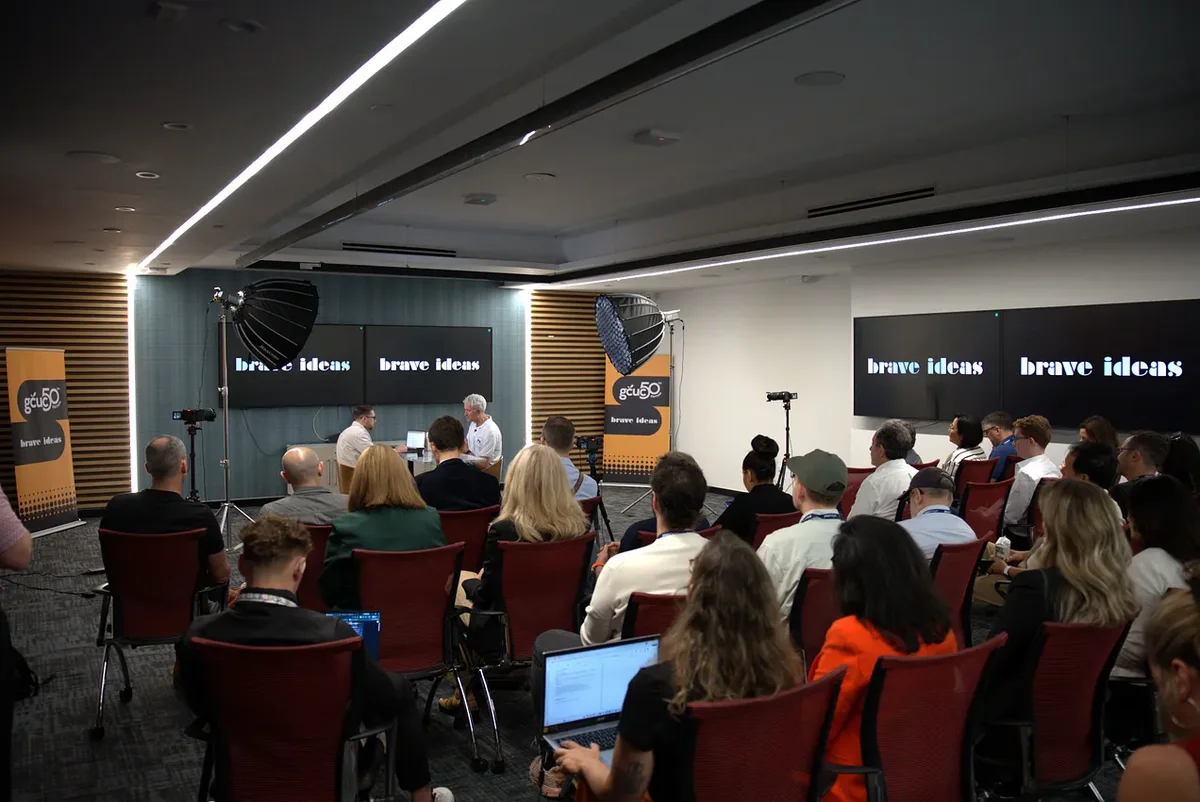
I answered a different question, about where work itself is going. Caleb told me, generously, that it was a well-stated evasion.
He was right, and it's taken me a while to work out why I side-stepped. His question was asked in the currency of today's model: long leases and credit covenants. Answering on those terms means not letting go of the bar.
Fighting the Existing Reality
Caleb's question was a fair one.
Traditional office value and financing rely on duration and credit. Lease terms are shortening, so the basis of value is eroding, and owners have to replace it with something. One option is diversification through coworking and other flexible space: many small customers combined into a larger community. But if a single enterprise moves in, the concentration risk is back, and the community often takes a hit.
So: does enterprise demand in flex space help the building or hurt it? The answer is still about the asset class.
My friend Chris Moeller, who was at GCUC that week, taught me a line from Buckminster Fuller that I have loved ever since:
"You never change things by fighting the existing reality. To change something, build a new model that makes the existing model obsolete."
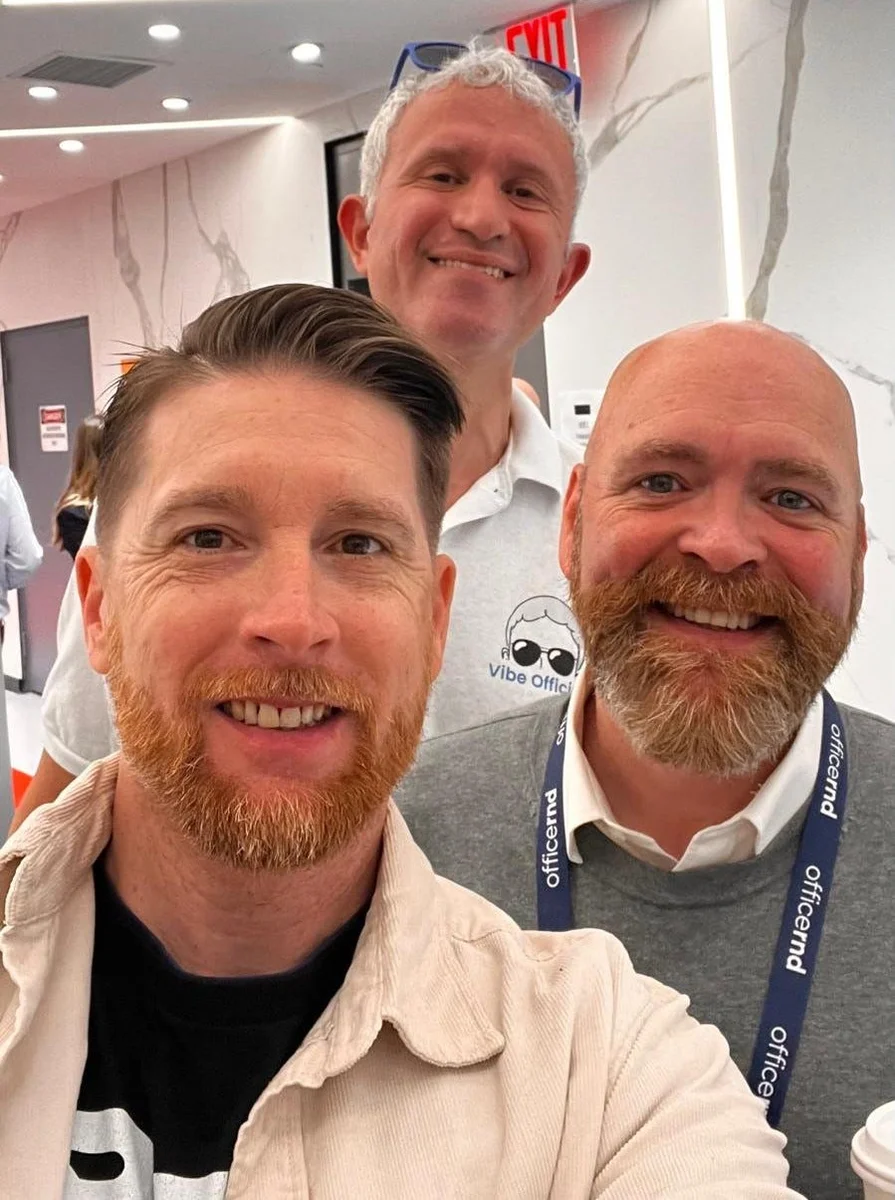
My time with clients at WeWork and since then has taught me that coworking providers sell flexible space and community, but many enterprise clients see it simply as office space they can secure quickly.
Bought that way, flex is just the existing model with a shorter lease. We have yet to make the existing model obsolete.
Breaking Bad Habits
While I was at WeWork, the marketing department of a large investment bank tried to move into one of our NYC buildings. They believed their shiny HQ was flattening the work they had been asked to do: attract creative talent, make things that felt alive, behave less like the rest of the bank.
They never made it out.
Finance saw a second rent bill. Corporate real estate saw an unnecessary dot on their map. Security saw a floor full of risks. Each objection was locally correct, and together they killed a fascinating experiment.
Three habits were working against the marketing misfits.
Duration. Long leases turn sunk costs into policy. Of course you can't take more space when we already have this space!
Authority. To act more like an octopus, you have to let the arms move on their own. Route every place-based decision through one risk-averse function, and no team can find what works for it.
Control. Security leapt to "no" before I ever saw a concrete reason. I started my career in cybersecurity, so I respect a good policy. But the risk of a few marketing employees working outside HQ pales next to the billions being wagered on trades down the hall every day.
Fifty people asked to be somewhere better. Several departments, justifying their own existence, said no. But, at what long-term cost?
Other orgs have answered that question with their actions. The U. of Colorado Anschutz Medical Campus, short on the private offices its faculty were entitled to, opened a shared, hospitality-grade alternative and let people opt in by trading the private office they no longer used. It was oversubscribed almost immediately. Allstate shed two-thirds of its footprint and gave a quarter of its 54,000 employees day-rate access to coworking in cities too small to justify a lease.
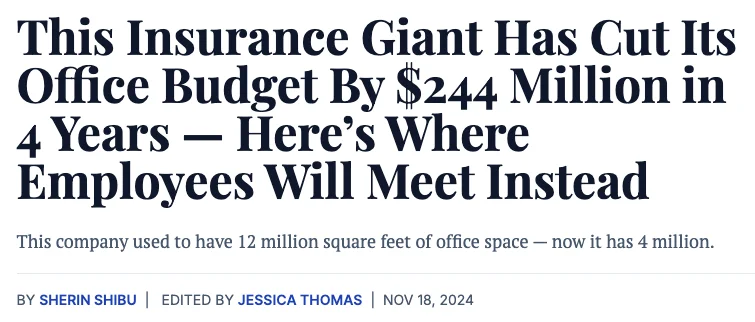
Access replaced ownership. Choice replaced control.
Broken Relationships
All three habits share one enabler: the relationship with the person who owns the building. It has to change.
Today, it's the same script over and over: we haggle and get back together when the lease is up. The more useful question, where your work and your organization are actually going, never gets asked.
Caleb and I agreed that neither side is set up for a new-model conversation.
In Your Vendors Are Change Agents, I shared stories from Airbnb and JPMC where hospitality service providers were not consulted about potential changes to employees' daily experiences. In the same vein, I rarely see real estate teams open their hand to a building operator and ask for their help as an agent of change.
Much less to let them make more space decisions on your behalf.
Go Deeper on the Future of Flex
Check out the full series of GCUC x Brave Ideas podcast interviews.
What Can You Do on Monday?
Caleb asked whether enterprise demand for flexible workspace strengthens or weakens a building's value. I said the question reveals how far we still are from rethinking the role of the built environment for work.
Here are three small steps you can take next week:
Let a team leave. For CHROs, CPOs, and GMs: somewhere in your org is a group asking for gathering budget, meeting in coffee shops, doing its best work anywhere but HQ. Give them a modest flex footprint and a few outcomes to watch.
Define place as a product. For workplace, IT, and finance leaders who each guard a piece of the decision: imagine teams could literally go wherever they wanted. What would they pick, how would you know it was working, and what would you have to do to support it?
Call your landlord. For anyone who owns that relationship: skip the terms at your next meeting and ask what future of work they think they are building for. A blank stare is information. A real answer might be a partner.
To increase the value of the time we spend together in person, we have to loosen our grip on the buildings we assume are the only places to go.
So when some team asks to leave your HQ, be the one who says yes.

What would it mean for your organization if you treated the physical workplace not as an obligation to maintain, but as a deliberately designed product that teams would choose to use because it genuinely serves how they work best? If this resonates with your work, get in touch.