

Whose AI Fluency Is the Problem?
I'm more introverted than people assume, and not one to start a debate. But my wife can tell when I have something to say.
While at a group dinner recently, a friend who is a graduate professor was lamenting the challenges of teaching when many students are clearly using AI to write their papers. Beyond poor essay quality, he felt their understanding of the material was degrading with each passing year. Several other guests chimed in with variations of "AI is the worst." My wife saw me biting my tongue and gestured for me to weigh in.
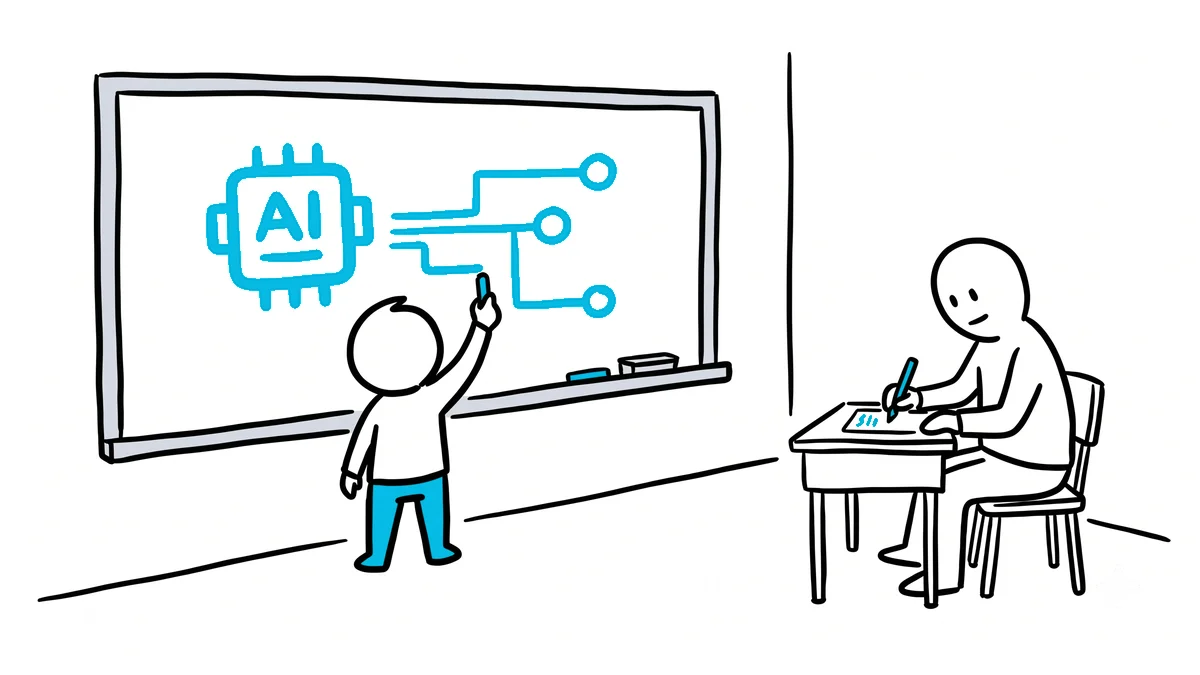
So I took a deep breath and shared that I'm tired of hearing educators and managers I know pour hours into debating what AI is doing to their students and early-career employees, and even more time trying to catch them in the act. All while putting almost no effort into getting fluent enough themselves to change how the learning actually happens.
And I found myself in the middle of a heated debate.
I've since had multiple versions of the same conversation. That dinner was one. Another was lunch with an adjunct professor. And several professors participate in the Lead with AI courses I'm running for a major university.
So I'm making my case on The Workline.
You're Managing the Wrong Change
I often write about the importance of defining a change. Get the definition wrong, and every move that follows aims at the wrong target.
Most people in these conversations have quietly defined the change as AI is doing something to my students (or early-career employees). That definition parks the problem inside the learner and leaves the teachers, or the HR and L&D leaders who own development, on the sidelines, worrying.
And the worrying is the easy part. It feels like diligence. It sits a lot closer to avoidance.
Redefine it. What actually shifted is that you, the teacher or the mentor, are still catching up on how to use this technology to support learning. You have to turn the spotlight on yourself and look closely at your fluency and your role in helping these people grow.
Three moves follow from that, and I have watched each one work.
One boundary before the examples: I'm talking about students and junior employees who are 18 and up. For younger kids like my own, whose brains are still changing fast, the role of AI is a different question.
1. Build a Transparent Rubric
While at university myself, I took a (pre-generative) AI course where we had to build autonomous agents to play the game Stratego. The professor wrote the game coordinator agent himself, and the codebase was available to the class.
We could build our agents any way we liked, with any method. The grade came down to one question: did your agent win?
That rubric was brutally clear. Take a shortcut, and your score showed it. Do the real work, and your score will show that, too. The responsibility sat with the student on every single move, and the method posed no threat.
2. Test for Depth
Notwithstanding the importance of outcomes, grading purely on wins leaves a gap. A paper or code written entirely by an LLM could pass the test with nothing learned.
What you put into these tools drives what you get back. A learner with a shaky grasp of the subject prompts shallow work because they lack the knowledge to push the model harder. Someone who knows the material and knows how to interrogate the tool goes further than they could alone. Same tool, opposite result. The variable is the person.
So stop hunting for AI fingerprints and start testing for a lack of depth, backed by your own expertise.
Ask someone to defend work out loud, and give them self-service tools to know what you expect. This could mean a genuinely demanding study guide assistant, or a tool that grades work and hypotheses on the fly. They can even have their own AI assistants interact with yours. The point is to make your standard clear.
One caveat here may be courses that teach writing itself, where the inputs are the point. But for most courses and most jobs, the depth of someone's thinking is the target.
3. Make the Hour Count
Live testing takes time, and most of the hour is eaten up by transmission: the lecture and the readings that everyone could absorb on their own.
Record the lecture, post the materials, and let people consume them before class. AI allows them to remix content into whatever format helps them learn best. Then the live hour goes to argument and workshops, where you can hear whether someone understands.
Remember early COVID, when leaders insisted everyone return to the office for the town hall, citing culture and connection? Then they talked for 45 minutes and left five minutes for questions. Such talks should be asynchronous recordings, leaving the live town hall for real dialogue and community building.
A seminar has the same shape. The lecture goes home, and the room is for thinking out loud.
Stop Drowning in Busywork — Lead With AI!
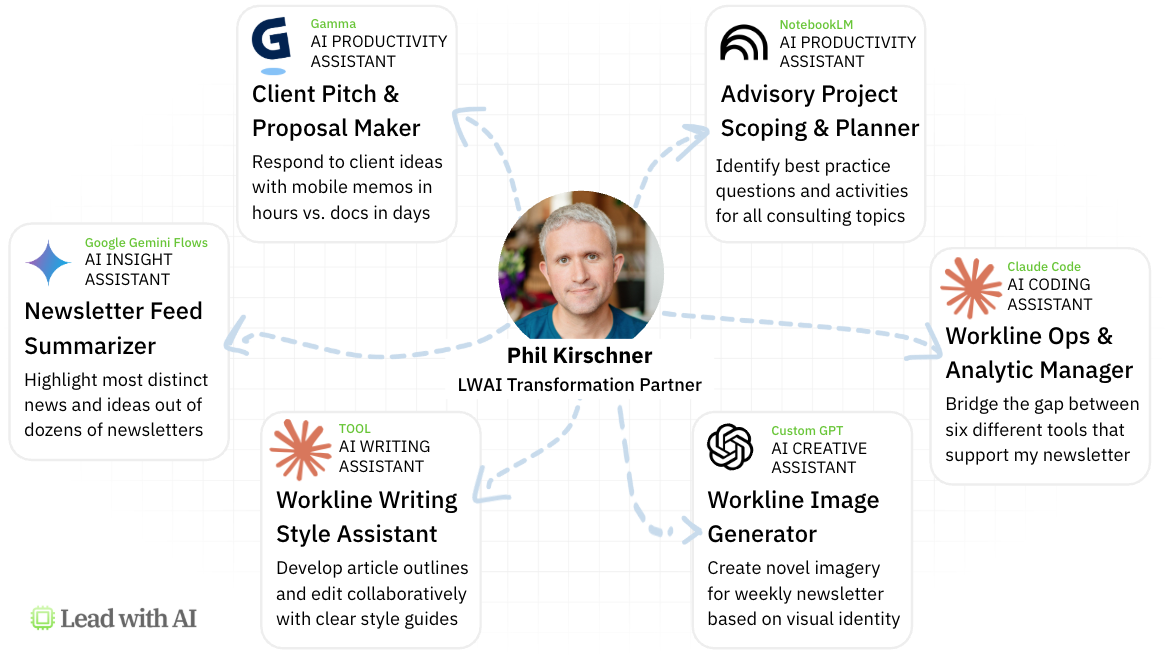
Most leaders know AI should save them time, but don’t know where to start. AI Leader Advanced is a build-as-you-learn course for which I’m a facilitator. Learn alongside peers, receive personalized coaching, and build 6 personalized AI assistants in just two weeks. Thirty minutes per day, no code required.
The Same Worry at the Office
You could swap "student" for "early-career employee" on all three moves. The apprenticeship worry inside companies is the same as my teacher friends' concerns.
Inside a company, that worry lands on the people who own development: HR and L&D leaders, and the managers who mentor day to day. Hearst lived the constructive version of this when its L&D team ran ahead of unprepared business leaders to train 7,000 employees on HearstGPT. The educators inside the org built the capability before they had to police it.
I watch it play out in the Lead with AI cohorts. Managers who spend their week reviewing work build a persona-based assistant their team can argue with first, or a scoring app, built in something like Lovable, that runs the submission against the rubric the manager finally wrote down. The work lands on the desk stronger, and the conversation moves to what comes next.
So the next time you worry about what the next generation will do with AI, turn the spotlight around. Define the change, build your AI fluency, and hand them a better future instead of waiting for it.
What Can You Do on Monday?
The argument comes down to three habits: make the standard you grade against transparent, test for the depth behind the work, and redesign your time so that depth has to show up live. None of it needs a budget or anyone's permission, and you can start Monday.
Catch yourself in the lament. The next time you hear yourself worrying about how students or junior employees use AI, ask yourself: what would I have to learn to offset this concern and improve their development?
Put your rubric in writing. Spell out the standard you actually grade or approve against, plainly enough that someone could point their own assistant at it and prepare. A clear standard moves the responsibility back onto the learner.
Flip one checkpoint. Take a single review, class, or town hall this week and pull the transmission out of it. Send the lecture or the deck ahead, and spend the live time on discussion and debate, where you can tell who actually gets it.
I don't pretend that any of this will be easy at scale, and I have nothing but respect for teachers everywhere. But it's our turn to pick up the tools shaping the lives and learning of the next generation.
Or we'll keep worrying and not improving.

How are you currently measuring depth and learning in your own context, and what would change if you redesigned your evaluation methods to make that depth undeniable? If this resonates with your work, get in touch.