

Who Owns the Frontline Experience?
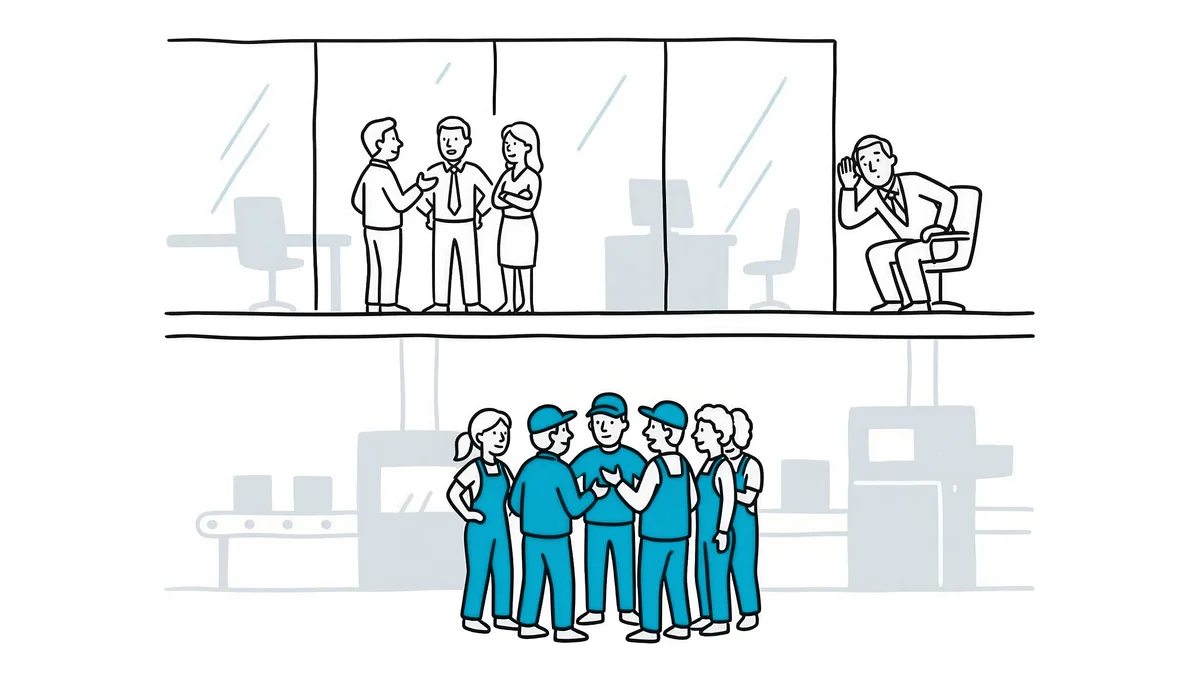
The person at the center of most workplace debates has a laptop, a calendar full of meetings, an inbox full of AI adoption reminders, and strong feelings about hybrid schedules.
That person makes up roughly 20% of the global workforce.
The other 80% — hotel housekeepers, warehouse pickers, bank tellers, data center technicians, truck drivers, resort instructors — rarely surfaces in those conversations. Often called "deskless," many have no company email address. They get shift schedules instead of calendar invites. They interact with customers and products all day, every day, and they are routinely designed around rather than designed for.
The numbers aren't pretty.
A Workvivo survey of 7,500 global frontline workers found that only 13% feel certain their company culture applies to them, and half say their company cares more about office workers. A Josh Bersin report found that frontline industries such as healthcare and hospitality average 25% lower ratings on Glassdoor than white-collar roles, that 75% of frontline workers are burned out, and that 51% feel like a number rather than a person.
For 80% of the workforce, the product of work is broken, and we need new product managers.
Four Frontline Experience Leaders
Over the past year or so, I've been tracking four organizations that created dedicated roles to address the frontline experience gap.
Google created a data center organizational wellbeing role — an advocate for the technicians who build and run the facilities that now power most of what runs online. The hire's mandate was to shape a work environment that empowers employees and optimizes well-being across all global locations. The buildings powering AI still run on people.
Levi Strauss nominated a senior manager of employee experience specifically for their global distribution centers, the network of warehouses that keep shelves stocked and orders moving. The role was built around listening: surveys, workshops, and focus groups, with findings going directly into how leaders develop and operate within those facilities.
Citi leverages a "Succeed at Citi" manager for their US bank branch network, focused on the full employment lifecycle for tellers and branch employees. This role role leads voice-of-the-employee and reskilling for a customer-facing workforce of nearly 240,000. A UKG study found that 68% of frontline employees want to learn new skills but rarely have a clear path to do so.
Vail Resorts hired a senior manager of change and culture with a dedicated focus on their frontline mountain employees. The job description calls for driving culture at scale across resort sites, designing engagement strategies across channels, and building what the posting describes as "a frontline culture that embraces change." The role requires partnering with HR, communications, and operations to address frontline engagement risks and implement solutions that deliver the desired employee experience.

Data centers, distribution centers, bank branches, ski resorts. The physical environments couldn't be more different. The underlying gap is the same in all four: the people doing the most operationally essential, customer-proximate work have historically had no one whose job it was to design their experience.
When Real Estate Takes the Lead
For companies without a dedicated team managing work experience like a product, progress is still being made. It's just hard to know where you'll find the people making it happen on the org chart.
At a conference last year, PepsiCo's Allyx Teel described how her workplace team assesses operational sites, identifying improvements such as better coffee, cleaner restrooms, and more comfortable break rooms for drivers and warehouse workers. Visible feedback boards let workers know their input is translated into action.

I wrote about it in my piece on stumping the panel: when frontline workers feel valued and equipped to do their jobs, the evidence shows up in safety metrics, quality indicators, and customer relationships.
That program works. It's also being run by a real estate team.
Not HR. Not IT. The "homeless" real estate department.
Real estate teams don't typically own this work. A people-centric leader whose approach I've written about before prioritized facility conditions and supported the follow-on work for driver experience. Structurally, it's a workaround: one team filling a gap because no one owns the integrated picture.
Guatemalan chicken chain Pollo Campero used a similar instinct when they redesigned the restaurant layout to reduce unnecessary steps. A spatial intervention, driven by direct observation of the actual work, that improved operating outcomes.

Both cases show what frontline experience work produces when someone has the instinct and the lane to act.
Neither required a large budget. Just conviction and collaboration.
One Role Can’t Fix a Feeling
That four very different organizations independently concluded the gap was real enough to hire for is, itself, a signal. But each role is, structurally, a version of the same workaround as in the PepsiCo example: a dedicated person trying to solve a problem that spans departments, from within just one of them.
The Workvivo data shows why that's difficult.
Frontline workers report feeling cut off from company culture, invisible to leadership, unable to find basic information, and stuck with technology built for people at desks. These surface as separate complaints, but they trace back to one structural reality: HR, IT, real estate, and operations each hold a different piece of the frontline experience puzzle, and no one is accountable for the full picture.
Look at the Vail role. Its job description requires the hire to partner across HR, communications, operations, and, implicitly, facilities and technology just to execute the basics. Whether that person has genuine cross-functional authority or just influence and goodwill will determine how far the work goes.
Improving frontline experience in ways that show up in safety records, customer satisfaction, and retention requires someone with authority to make decisions across functions. Right now, most organizations rely on influence and goodwill to get this done. Influence has its limits.
That's part of my Chief of Work argument: a unified function with accountability for how work gets experienced through the choices workers make.
All of the workers. The 80% with shift schedules, too.
Bring Your Leaders Across the Line
Inspired by what you're reading? Phil's talks and workshops bring a credible, cross-functional perspective to help organizations reimagine and redesign work for better experience and outcomes.
What Can You Do on Monday?
The gap between "we care about frontline workers" and "someone owns that work" is usually wider than leaders realize. Most organizations are somewhere between PepsiCo's real estate workaround and Vail's dedicated hire. These three actions help you find out where you stand.
- Map end-to-end frontline experience ownership. Ask the question specifically for your frontline population: from the physical conditions of their workplace, to the technology in their hands, to the feedback loops available to them. If the honest answer is "split across several teams with no single accountability," that's your starting point. Name the gap before trying to fill it.
- Surface the workaround already happening. There is almost certainly an initiative underway in an unexpected function (real estate, operations, IT) that addresses frontline experience without being labeled as such. Find it. Bring it into a visible, cross-functional conversation and keep it from staying a single-function effort that never connects to the larger picture.
- Audit your listening tools for frontline coverage. Most employee surveys were designed for desk-based work patterns. If your frontline workers participate at meaningfully lower rates than your office population, the tool is the barrier, not the sentiment. Fix the instrument before you interpret the data.
Find the person in your organization who cares most about the frontline experience, see how deep in the org they are, and map the network of people they rely on to drive real change in exploring how behaviors influence work outcomes.
That constellation of people may already be your Chief of Work. Your organization just hasn't named it yet.

Does your organization have a dedicated frontline experience role? Or something even better? Get in touch to let me know!