
Upskill the Meeting
Somewhere on your (or a client's) calendar is a meeting that exists because no single function owns the answer.
Could be a workforce planning forum, workplace steering committee, or employee experience council. The participants may include HR, IT, real estate, plus maybe finance, comms, etc. It's a recurring series and the agenda usually opens with a round robin where each constituency delivers its update, its slides, its slice of the story. Then the group makes decisions that could impact the daily experience and/or ways of working for large swaths of employees.
I recently had coffee with a friend — let's call them Avery, which is my middle name — who runs real estate and workplace for a media company. Avery mentioned one such committee when I asked how AI is (or isn't) changing their work. After listening to and complimenting their progress, I suggested a potential next step to further transform the mechanics and impact of that particular recurring meeting.
And I was surprised to realize it had never crossed Avery's mind.
During Lead with AI courses, we often talk about "the capability overhang," which is the gap between what's possible with AI and most leaders' individual AI fluency.
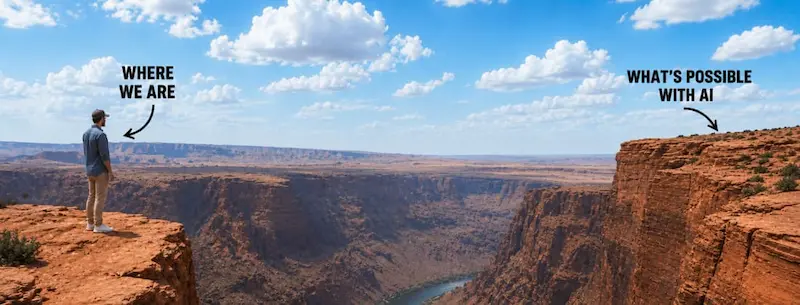
Avery had already closed the personal half of that gap. The half still open runs between them and everyone else on that agenda.
Sliding Into the Meeting
Admitting they're still in the "crawl stage" with AI, Avery explained the current state of a regular meeting they have with partners from HR and finance about the status and potential strategy for various offices in their portfolio.
Preparing for a cross-functional conversation like this ordinarily requires each participant to spend several hours analyzing data, synthesizing a story, and making a presentation or document to share. In addition to lease obligations and daily office utilization, Avery described one simple but surprising part of their regular investigations that both takes a lot of time and requires some org chart data gymnastics.
When evaluating the strategy for a given location, it helps to know the influence dynamics of the local senior leaders. That is, to whom do the majority of local staff ultimately report, or who has the most sway because of less visible reporting lines.
Company org chart data is accessible to all employees, but Avery said this particular kind of analysis can be complex without super-user access to the HRIS, or personally knowing all the local business lines.
Sharing is Caring
To ease some of the pain of preparing for a meeting like this, Avery's company created a shared data lake for key, cross-functional metrics like approved headcount, budget, office sizes, etc. This is not an "AI solution," in the traditional sense, but it made it much easier to avoid discrepancies between steering committee members' individual analyses.
In practice, this means that Avery can query approved YE2026 headcount in XYZ city, and get the exact same number that their finance, HR, comms leader, or any other peer would get. Nothing revolutionary, but still very good progress.
Where individual AI fluency now comes into play is that Avery can now leverage ChatGPT or Claude or whichever LLM to analyze data and even create slides in a fraction of the time it used to take to compile their side of the story.
But Avery still builds the deck alone. So do HR and finance. Three people, one set of numbers, three private methods, three decks.
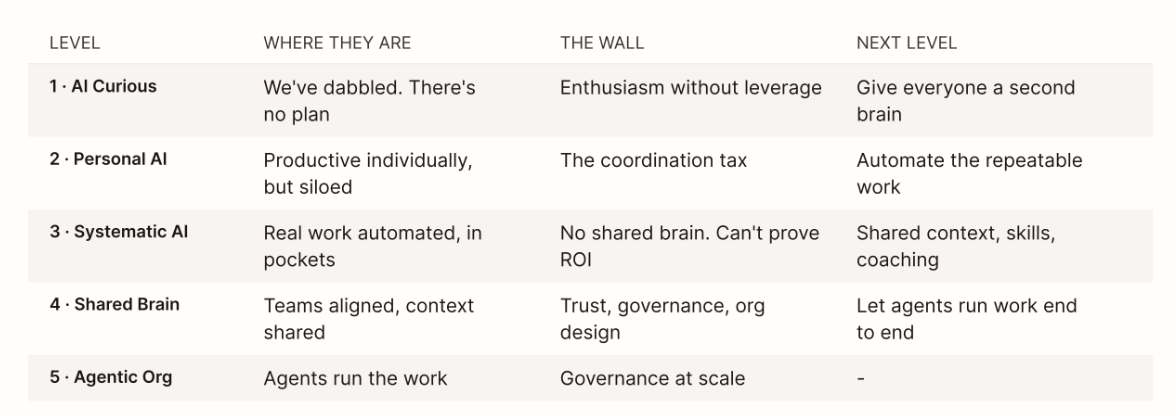
Zapier's fluency matrix calls this wall the coordination tax — see "Personal AI" above — and its suggested moves to level up are automation and shared context. Humans can be taken out of the loop for data production, so that we can spend more time on strategic discussion and decisions.
A Recipe for Effectiveness
Last year, I asked HR, IT, and real estate to use the same first slide in every executive presentation to coordinate the narrative. A panelist on that webinar named the problem underneath it: hand the same data to five functions and five answers come back, each in a different language.
Pushed one layer down, that instinct becomes something else.
Most AI tools call this a skill — a written procedure an assistant follows the same way every time — but I often refer to them as recipes or playbooks to avoid confusion.
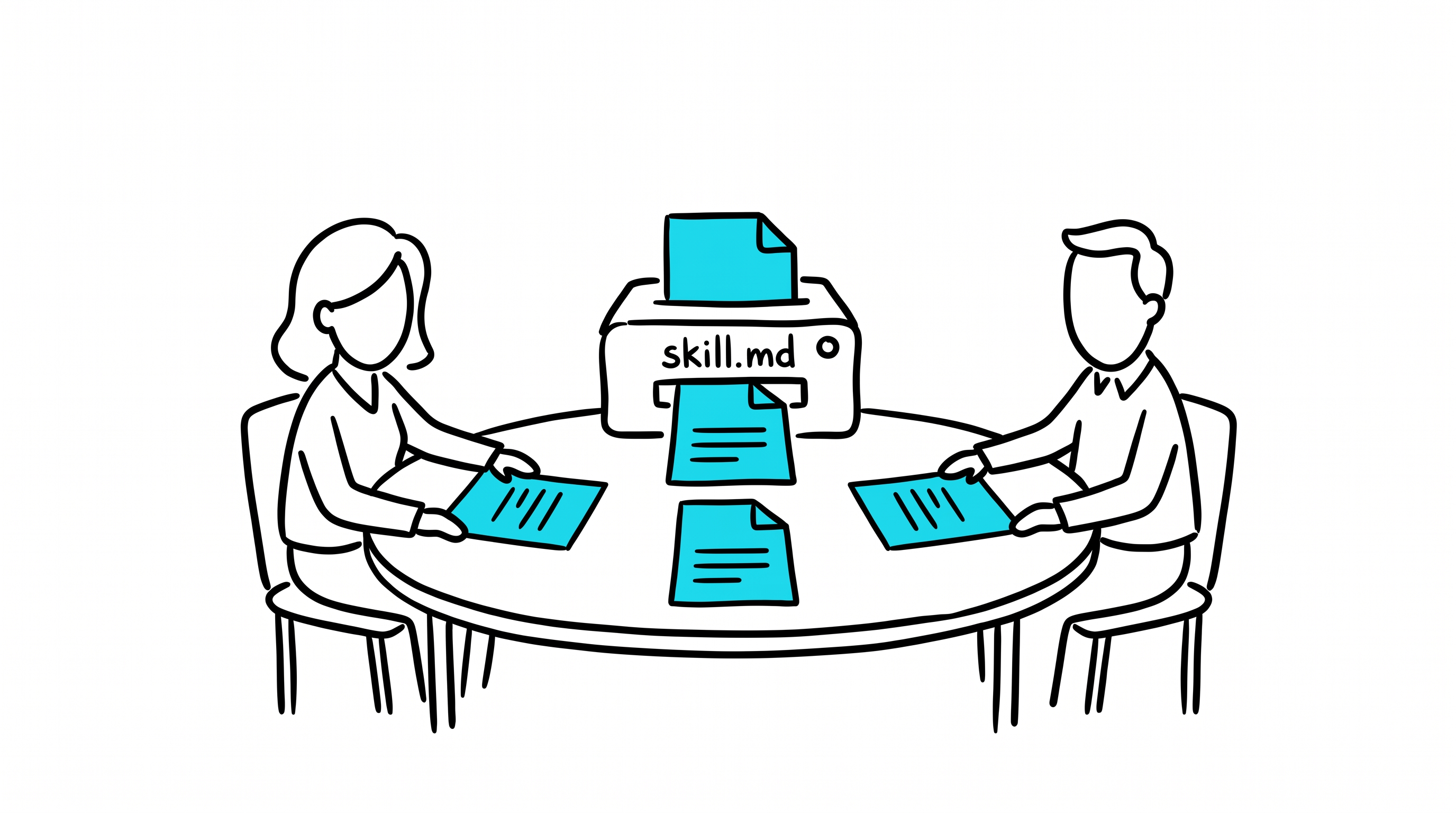
What I suggested to Avery was that all participants of the regular portfolio meeting could co-create a skill that systematically and consistently creates the required deck or document that powers the meeting. Each subject matter expert would have control over their part of the story, e.g., the 20+ years of nuance in how to represent office utilization trends vs. headcount forecasts vs. budget variance, etc.
In addition to the individual time saved, a documented playbook for how the strategy meeting presentation gets compiled could be reviewed by any member of the relevant teams — even those too junior to attend. Maybe a hotshot 20-something data whiz in one of the teams could help improve the analysis even while not being authorized to access the data directly.
Once I described it, Avery saw the value immediately: "Everybody's part of the conversation as the agent is working on it."
But distilling one's specialized knowledge into an AI skill could be a scary proposition.
Meeting Better
So I asked Avery if my idea felt threatening. Strategy decks signal expertise: I know this market, I built this analysis, you need me. Handing that to a procedure exposes what made you you.
"It doesn't scare me," Avery told me. "It actually makes me hopeful." Then Avery told me why.
I don't use the word 'hate' very often. I think it's the strongest word in the English language. But I hate when the only result of a meeting is another meeting. We have not accomplished anything.
I have been asking leaders for a year what they have let go of thanks to AI. Most say nothing, but Avery can see the value of spending more time discussing options rather than making and reading slides.
And with the recovered hours, each expert can spend more time on higher-impact work and sharing information with their peers that the AI agents and skills cannot yet see.
What Can You Do on Monday?
Truly redesigning work requires taking personal prompts or workflows and making them reusable by other people or teams without your involvement. Changing whole business processes may be complicated, but improving one recurring meeting is not.
To get started next week, find a recurring forum where the first agenda item is routinely a round robin, then put your hand up to start upskilling the meeting.
- Name the question your forum answers every cycle. The one that returns each cycle, across locations or teams or BUs, and arrives in three separately prepared versions.
- Draft the recipe together, one section per expert. Each participant writes how their own part gets derived, which keeps the nuance of a twenty-year career in the room instead of flattening it.
- Send it to the people who never get invited. The analysis improves fastest from readers who can study the method without ever touching the data.
Data sharing is not new, but someone still has to rewrite the agenda.

What is the first item on your recurring agenda, and what would the room talk about if that part arrived already done? If this resonates with your work, get in touch.