

Ask Me Anything
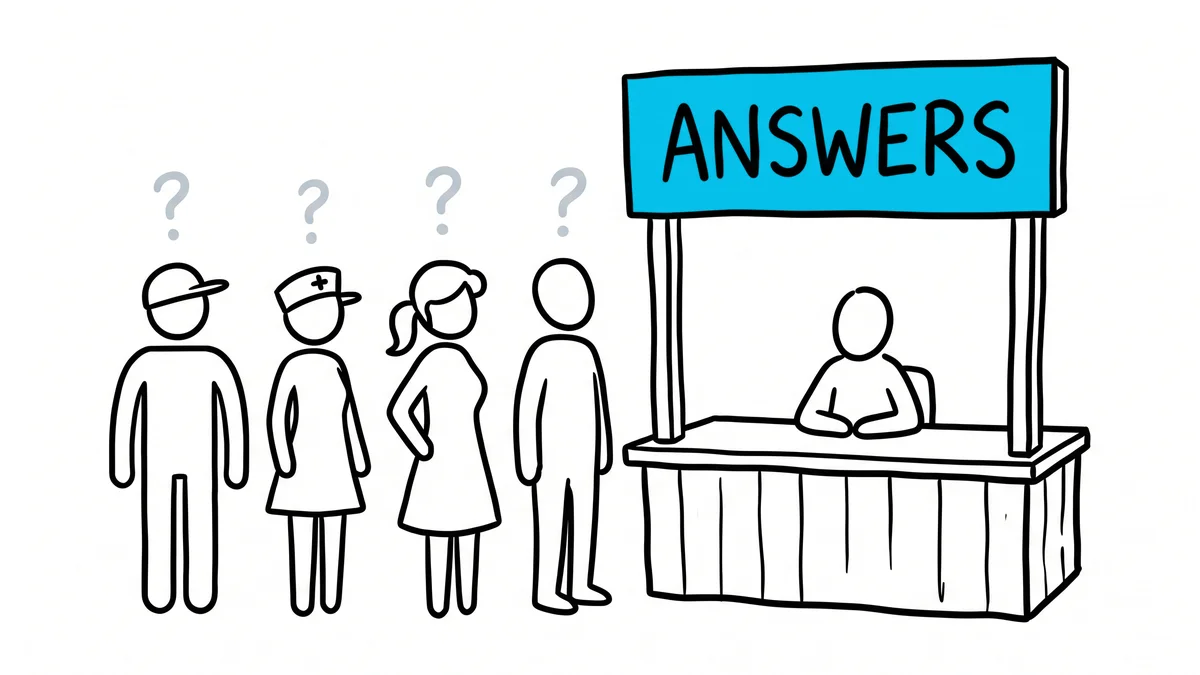
Tomorrow marks the end of my first full week back from summer vacation, and my kids' first week of school. I'm finally spinning The Workline machine back up to its usual speed, and have some interesting profiles and provocations in the pipeline.
So a quick story today about my first foray into AMA (Ask Me Anything) culture, on the site that made it famous: Reddit.
The good people at Nexthink have hosted me twice on The DEX Show, first on where digital employee experience and real estate collide, and more recently on the end of the "job" as we know it. A few weeks ago they asked whether I'd sit for an AMA in their subreddit. Here's what I posted on LinkedIn when I said yes:
Ever wanted to ask me anything? Well, now you can...on Reddit even! Many thanks to Nexthink for giving me the opportunity to be on the other side of this kind of "I hope you can type quickly!" kind of experience. I'm obviously not shy with my opinions on this platform and my newsletter, but I will try to be even more open and candid as best I can, in the spirit of Reddit's AMA culture.
Easy enough to write. Harder to deliver.
Calming My Nerves
I was worried about two specific things before going live.
The first is a little embarrassing. I've read Reddit for years and have never posted a single thing on it. No comments, no questions. And it's clearly not because I don't like posting things on the Internet. My debut was going to be an hour-long session with my name and face at the top of it, in a community of mostly IT practitioners who deal with this stuff every day.
The second was logistics. An AMA rewards pace. A thoughtful answer that lands forty minutes late has already lost most of its value, and I could picture myself rationing responses down to four sentences apiece because my hands could not keep up with the queue. My body doesn't always do what I want it to.
I didn't mean for this to be a product plug, but Wispr Flow to the rescue on point two. I only recently started using it and I dictated my way through nearly every answer in the thread. People who asked a layered question got a layered response, which is the whole reason to do one of these. I'll take the little AI victory.
I also mention that app because it changed what I could give. Small, concrete example of the thing I keep writing about: a change to how the work gets done, judged by whether the output actually got better.
Anyway, twenty-seven people (all unknown to me) took the time to ask a question, which loosely clustered into three categories.
Invisible Friction
One IT professional asked what an early warning light for hidden AI drag would measure, given that adoption rates and thumbs-up scores tell you nothing. A help desk veteran of seven years pointed out that the people filing the fewest tickets are often the ones having the worst time, because they've quietly given up asking.
My answer in both cases was the same. The warning light is the effectiveness measure you were already running before the change arrived. Without a baseline that predates the tool, you have no way to know whether cycle time improved or whether people are just spending longer thinking and reworking. Knowledge work rarely has that baseline, which is why so much of this stays invisible.
Same dynamic I wrote about in Duct Tape and Favors: the effort holding the experience together sits exactly where nobody is counting.
A related question asked why employees absorb some changes and quietly resent others even when the tools work fine. Same root cause. The change rarely gets defined before launch: people get told here's the new thing, IT loves it, go, having never been convinced anything was broken first. That resentment stays off the record, which is why I keep handing out the same forty questions.
Blurred Lines
Where does digital employee experience end and the rest of work begin? Is it still useful to separate the physical workplace from the digital one?
I gave a version of the answer I've been circling for two years. Operationally those distinctions matter, because somebody has to fix the thing when it breaks. Experientially they vanish. Employees meet work as a single surface and have no interest in whose budget line a problem falls under.
My favorite illustration is still the employee who sits down, plugs in a phone, finds the outlet dead, blames IT, and learns it's a facilities management and union electrician problem. That gap is the whole argument behind the Chief of Work.
Career Coaching
In a community built around enterprise IT tooling, a lot of the questions turned out to be personal.
A college student wondering whether studying IT still makes sense. Someone at thirty asking how to future-proof a mid-career. Another asking how a person with no resume and no network builds enough trust to get hired at all. A few asking what entry-level even means once AI absorbs the work that used to train people.
I gave those the most honest answer I have.
Over time, more of us will operate like a company of one, whether or not there's a W-2 involved, working in fluid teams that assemble around a piece of work and dissolve afterward. What holds up is learning in the open, where strangers can evaluate you before an employer ever does. Add enough AI fluency to judge what's coming at you and you're in better shape than most.
Much to my surprise, nobody asked me about workplace technology products. They wanted to know if they would be OK in the long run.
What Can You Do on Monday?
I spent an hour answering questions (full AMA here) — including a pointed one about my decision to join McKinsey — and came away with a better read on what people are carrying than an engagement survey would ever give me. The channel was free.
Here are three lessons you can take into next week.
- Host an AMA inside your own walls. Pick a leader with opinions, put them in a channel for an hour, and let people ask without routing through a manager. The questions that show up will tell you more than the answers do.
- Stop grading service on tickets closed. Find the one or two effectiveness measures your team was tracking before the latest tool landed, and watch those instead. A falling ticket count next to a rising workaround count is a team that gave up on you.
- Check on the people who stopped asking. The college student, the seven-year help desk veteran, the mid-career manager doing math on their next decade. They are reading the same headlines you are, with fewer levers.
I promise there is no shortage of questions looking for somewhere to be asked.
If you've been sitting on one, you know where to find me.

Thanks again to the team at Nexthink and to everyone who showed up with something hard. The bar for a good question in that community was high.