

What I Now Believe About the Chief of Work

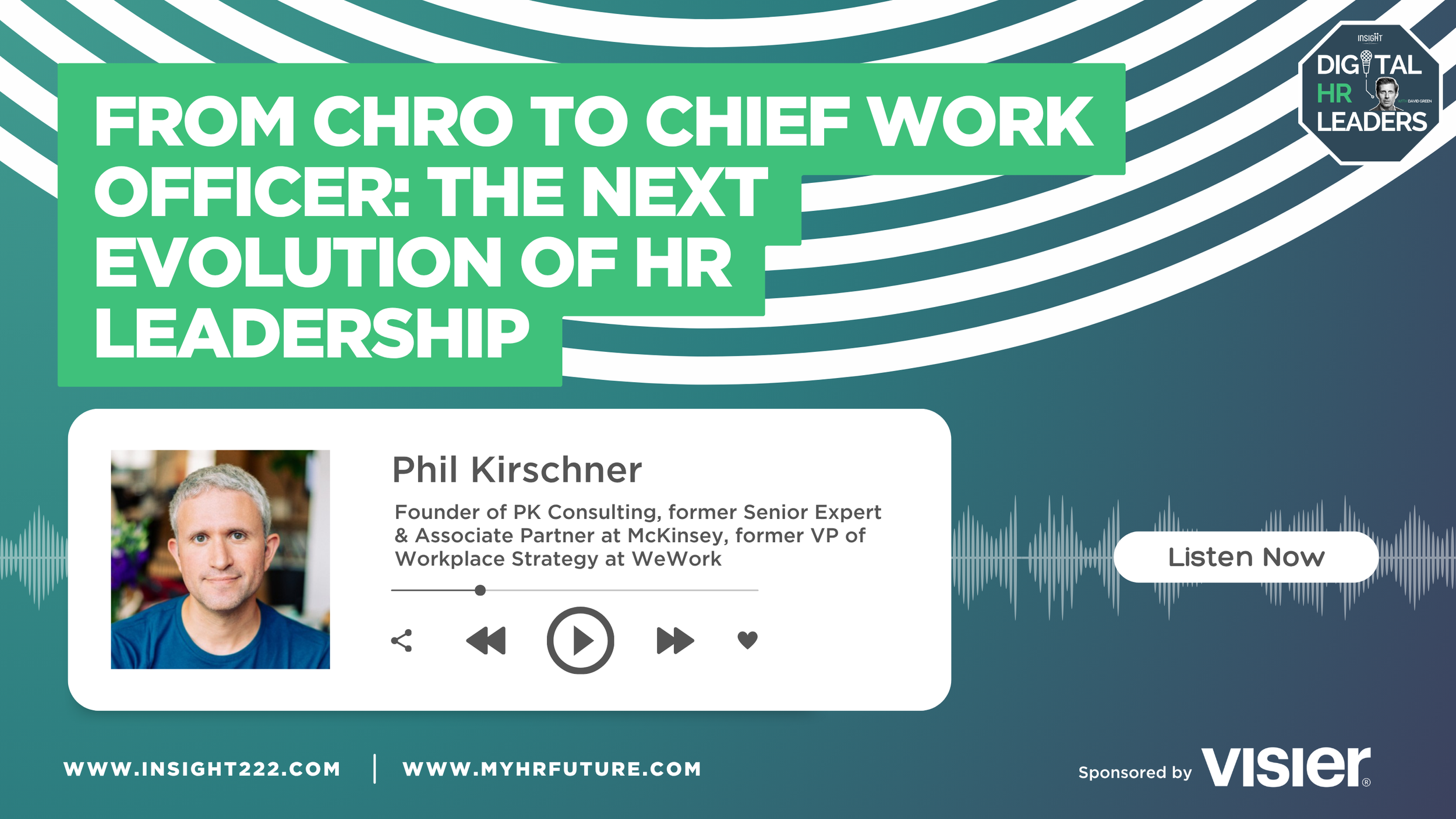
I recently sat down with David Green on the Digital HR Leaders podcast for what became the most complete articulation of the Chief of Work argument I've made publicly. We covered where the idea originated, why real estate keeps getting dropped from the conversation, what the function would actually contain, and why AI makes the structural problem more urgent rather than less.
Over the past year, the Chief of Work thread has run through almost everything in The Workline.
Moderna kickstarted the conversation. BMO reminded me what the function could feel like, even when nobody called it that. Arvind KC at Roblox (now CHRO at OpenAI) demonstrated what’s possible when the handoffs disappear. The podcast put the full argument in one place.
Here's what I believe now.
The Concept Has Drifted
The phrase "Chief Work Officer" has moxy. I hear it from CHROs, consultants, and conference panels. Almost every time, it means some version of CHRO 2.0: an expanded people function, maybe with AI governance tacked on, perhaps with a seat at more technology decisions.
Place never comes up.
Corporate real estate has no consistent home in the org chart — roughly a third in Finance, a third in HR, the rest scattered across COO, CAO, CIO, or even Legal. Recruiting sits in HR. IT help desks sit under IT. Those functions develop shared vocabulary and build toward a common operating model. Corporate real estate is still stuck on the wrong stages.
Three disciplines. Three echo chambers. Employees don’t care who made their day harder.
When someone says "Chief Work Officer" and means people-plus-technology, they're describing a meaningful upgrade to HR. The function I've been writing about goes further, because the employee's day goes further. Into the building when they’re supposed to be there, to the room they booked, and using the technology waiting inside it.
What’s Inside a Chief of Work Team?
Call it a Human Chief Operating Officer, or Head of What It Feels Like to Work Here. Both describe work that falls through the cracks between existing silos.
In the podcast, I laid out what I'd pull together to build this function inside a large organization:
- From Real Estate: Workplace strategists and spatially-oriented change managers
- From Technology: Collaboration tool strategists and AI adoption planners — the human-centered layer, not infrastructure
- From HR/People: Employee listening, engagement, and benefits design
Give that group data science and human-centered research support. Keep it independent of the source silos. The mandate is straightforward, but hard:
- Find high-volume journeys, rhythms, and choices that define the work experience
- Put the right combination of people, tools, and spaces behind those journeys
- Own the outcomes data that shows whether any of it worked
Think of the Chief of Work as a Fitbit for your organization. Or the pit crew for an F1 racer. It can't force better choices, but it makes visible the cost of the choices teams are making.
The function produces and iterates on recipes: here's how HR, IT, and real estate configure around onboarding, gathering, AI adoption, etc. Then it measures whether the recipe delivered.
JPMorgan unified HR and IT experts around onboarding. Remote-first leaders like Dropbox think of work as a product, and measure the outcomes of gathering choices. Sharon Doherty at Lloyds Bank carries the title Chief People and Places Officer, and their human-centered work on the built environment is visible because of it.
I’m seeing more and more roles that sound like product managers for work. These examples keep surfacing because the model works. Silos generate what one organizational design framework calls "territorial taxes,” or the energy spent on cross-functional friction rather than actual work.
Hear the Whole Story
I am so grateful to David Green for having me on the Digital HR Leaders Podcast to share my perspectives on Chief of Work roles. I encourage you to follow him on Linkedin, and listen to the episode yourself to hear the full backstory and David's insights from working with HR executives around the world.
My Background in the Foreground
I've spent my entire career inside this problem. The path was lateral across silos, not a straight line through any one of them.
I started in IT risk and security at a bank, studying technology choices and the ways employees tried to route around frustrating controls. Then, expense management, where accounting policies generated unwanted behaviors. Then, by accident, the Smart Working program, which changed how thousands of people experienced their day.
From there: JLL, helping other organizations climb the same mountain. WeWork, building a workplace discipline from scratch and learning how experience and community can be a product. Then McKinsey, sitting between the real estate and people practices, working with CHROs and real estate leaders on the same question from opposite directions.

That path gives me something a design firm, generalist strategy team, or HR consultant alone can't replicate. I can walk into a room and establish credibility with executives across finance, technology, people, risk, and operations.
I've held a version of each of their problems from the inside and understand the invisible, political dynamics between the functions.
The calls I get from clients feel thematically similar. An office move that challenges leadership entitlement. A collaboration technology rollout that crashes due to a bad meeting culture. An AI adoption rollout that fails due to change resistance and misaligned incentives.
Work design sits between functions, and nobody owns the grey space.
That's the work I do through PK Consulting, and I've been a Chief of Work, under various titles, for nearly 25 years. If you're navigating the gap between how your people, technology, and place functions operate today and the integrated model your employees actually experience, I'd welcome the conversation.
The AI Argument
Here's where my thinking has refined most over the past year.
When AI handles routine work, workplaces can become more human-centric, focused on collaboration and connection. I buy that. But a second-order consequence gets far less attention.
AI will, within a few years, handle a significant share of the coordination overhead that makes hybrid work hard. Agents can handle the cognitive load of coordinating calendars, locations, resource availability, travel times, and weather.
We hate hybrid because manual coordination is a mess.
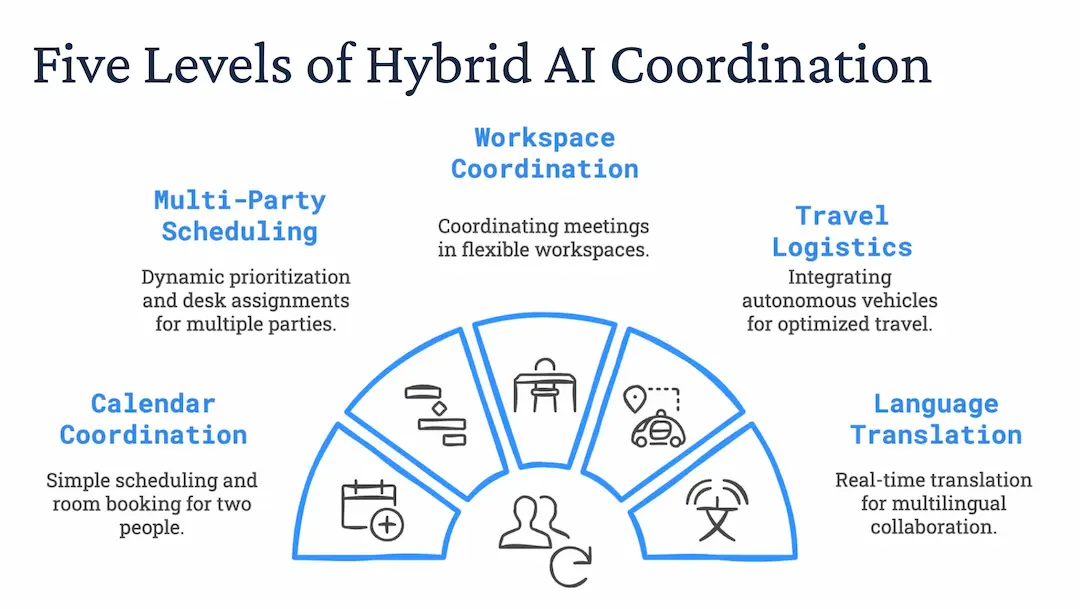
That makes place design more consequential, not less. Agents will nudge us towards spaces with clear purpose, measurable outcomes, and hospitality-grade experience. Mandates won’t stick for places that don’t generate value.
If your real estate function has no data model connecting to people analytics, that gap compounds. The organizations building toward integrated workforce and workplace intelligence today are the ones whose spaces will perform when AI starts doing the routing.
Bring Your Leaders Across the Line
Inspired by what you're reading? Phil's talks and workshops bring a credible, cross-functional perspective to help organizations reimagine and redesign work for better experience and outcomes.
What Can You Do on Monday?
The hardest part of acting on this argument is that the people who feel it most acutely rarely share a room. They hold different titles, report to different executives, and spend enormous energy working around the same structural problem independently.
Here's where to start:
- Convene the misfits. Find the disparate employee experience strategists. Bring them together. Ask each one where they hit a wall. Then find a way to get those stories in front of their executives at the same time. What sounds like a coordination problem usually turns out to be a mandate or incentive problem, which you must discuss in the open.
- Find who owns the handoffs. Pick one employee journey — onboarding, returning from leave, moving to a new team — that requires HR, IT, and real estate to cooperate. Ask who owns the experience end to end. If the answer is nobody, start there.
- Follow the echo chambers. Attend one conference outside your function this year. Real estate leaders: go to Transform or UNLEASH. HR leaders: go to a CRE or workplace design event. Bring back two things your own function has never said.
The argument is coherent. The structural gap is real.
Someone in your organization could start closing it this week, under whatever title they already hold.

How might you bring together the people in your organization who are independently struggling with the same systemic problem, and what would become possible if they could finally see that they're not alone? If this resonates with your work, get in touch.
The full Chief of Work article series lives at walktheworkline.com/topic/chief-of-work.