

Your Change Network Needs a Copilot
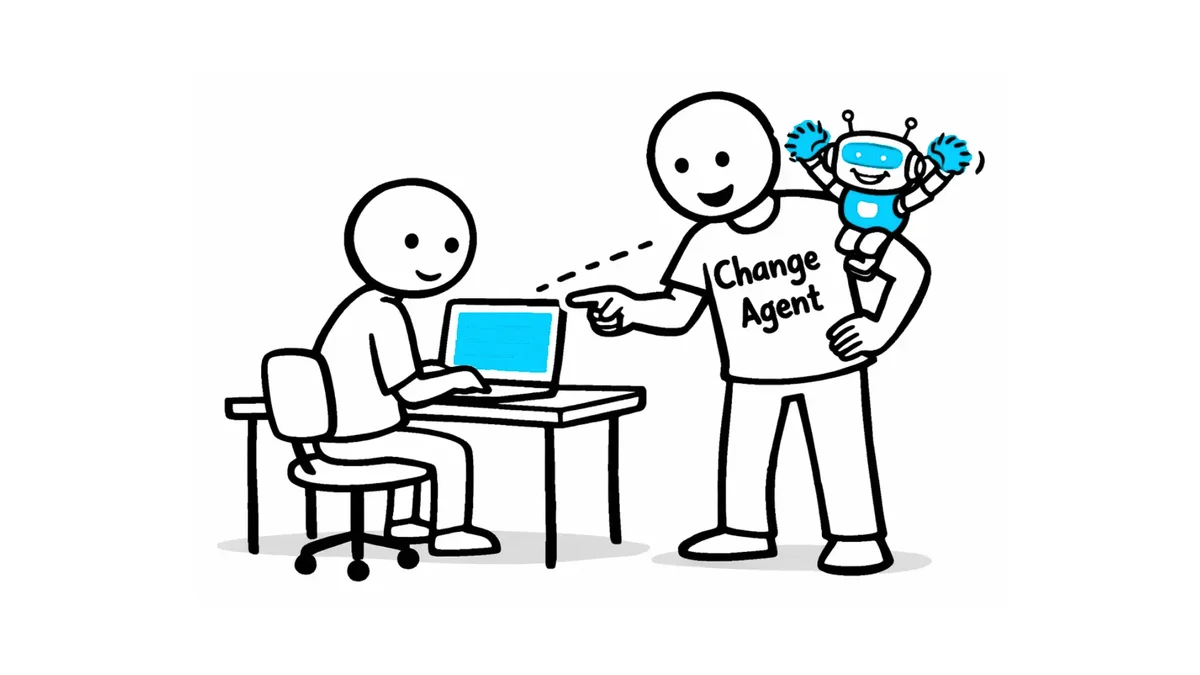
Three questions are getting a lot of attention right now:
- How can AI help us do our work?
- How can AI agents (or "agentic AI") do some of that work for us?
- How much change management is required to address #1 and #2?
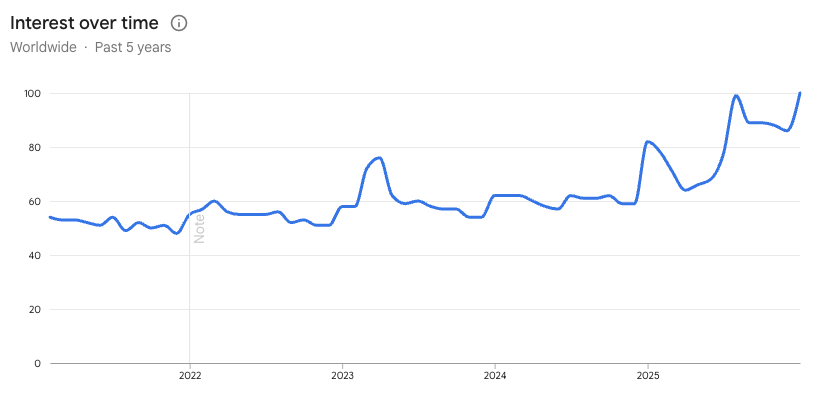
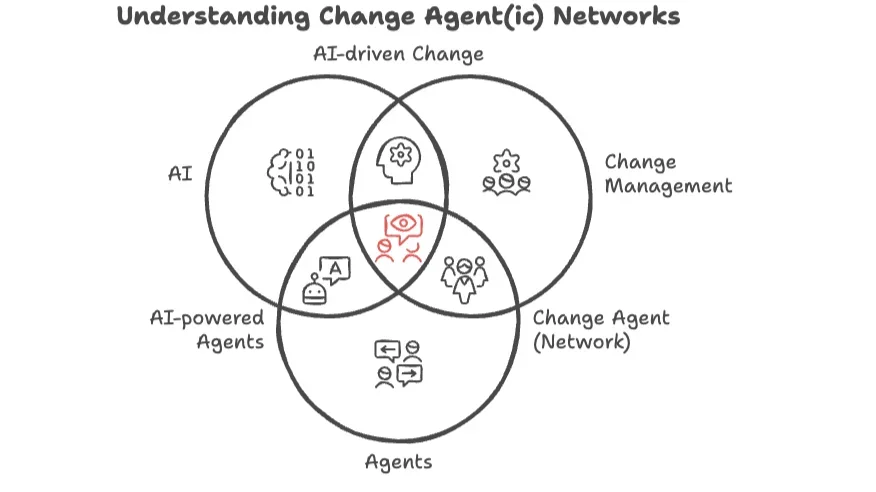
I'm currently supporting change management for an AI company's HQ relocation, which prompted me to revisit an article I wrote before launching The Workline. But I have seen few, if any, resources connecting the dots on the potential role AI agents could play in implementing change management (for any topic, not just AI), particularly given the common use of change agents in change management programs.
Yes, it's a tongue twister.
When I first explored this intersection in late 2024, agentic AI was mostly theoretical. Now companies are actually deploying AI agents across operations, and the change management challenge has moved from "should we use AI?" to "how do we make AI adoption stick?" The irony is that while AI agents are maturing rapidly, most organizations still run change programs the same way they did a decade ago—with the same disappointing results.
I’ll start with some background on (human) change agents and the basics of AI agents, then end with specific examples of how the latter will help the former in the future. If the base topics are already familiar, feel free to skip to the third section.
Human Change Agents
For larger and more complex projects, it's common to establish a formal change agent network—a group of individuals who extend the reach, influence, and efforts of change leaders and change management practitioners. These individuals are formally onboarded into their role to help communicate whatever is happening, train others on new processes or tools, role-model the change themselves, and generally provide leverage for whoever is accountable for the delivery of the project and acceptance of the new way.
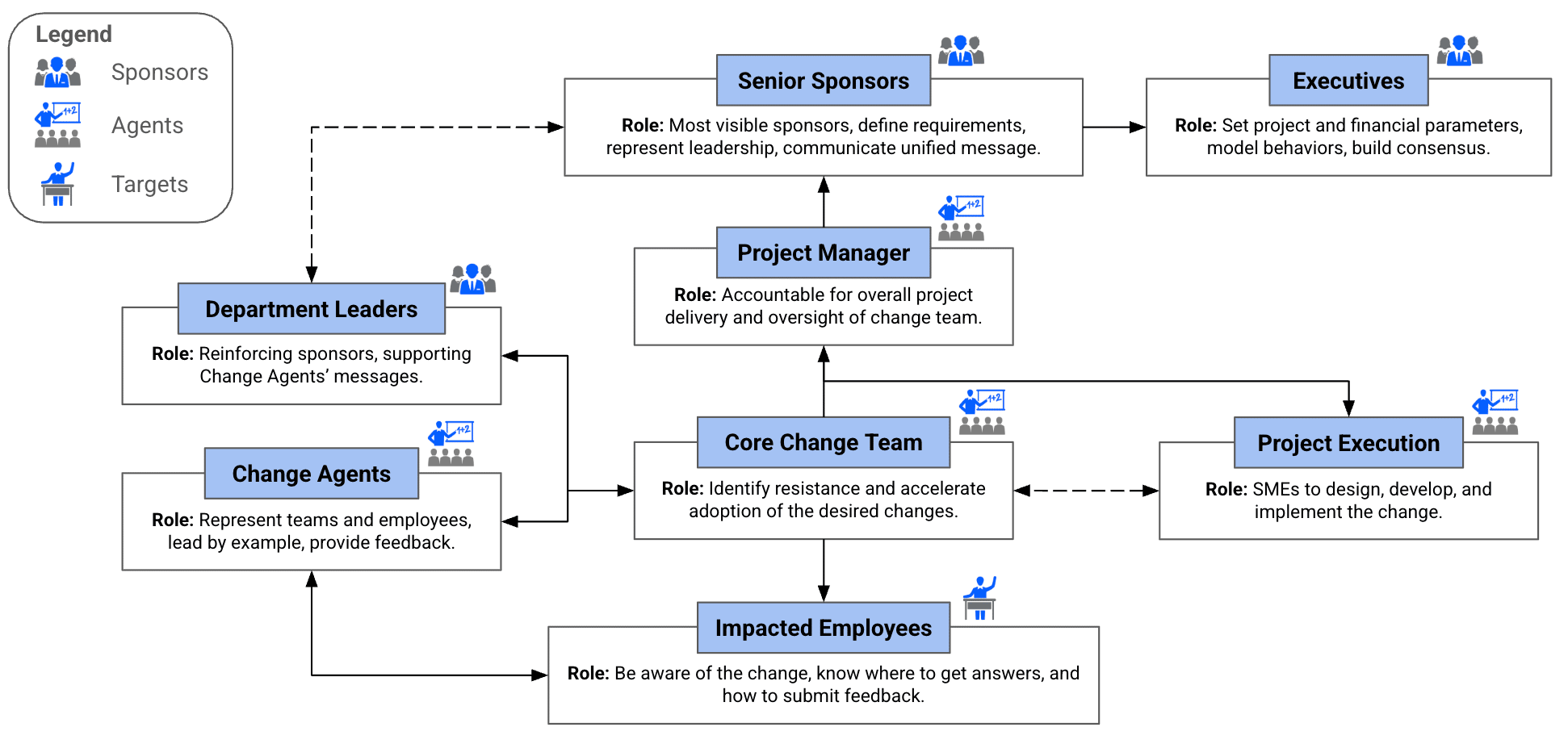
Using my office relocation client as an example, I followed my own advice when formalizing the governance of the change program. We have a steering committee to oversee the project, and a change agent network with representatives from each department. Within their teams, the change agents support their peers and liaise with senior managers.
In practice, this means HR, IT, and Real Estate are each seeing different signals—and AI agents can help surface those signals in a shared view.
Understanding AI Agents
The term "agent" has rapidly gained popularity with AI systems that can act independently...or, with an eye on the dictionary definition of agent, on someone's behalf. Chatbots are examples of AI, but only respond when you ask. AI agents, by contrast, take actions independently based on predefined conditions.
Using leadership coaching as a simple example, a manager might ask a chatbot for help before a meeting with a direct report.
How could I could say ___ during my meeting with ___?
A manager coaching agent, on the other hand, might proactively send the manager an agenda for their 1-1 meeting based on recent emails with the employee.
Changing Change Agents with AI Agents
There’s that tongue twister again. 🤪
With the basics of (human) change agent networks and AI agents out of the way, we can finally consider how the two can help each other in a 1+1=3 kind of way. Here are a few ways that AI agents can add value to change agent networks.
We can continue with an office relocation project example.
Scouting the Champions
AI could be used to identify influential and change-positive members of the groups impacted by the project. By analyzing anything from emails and Slack channels to past facilities tickets or utilization data, specific employees could be identified who are most mobile in the office, submit the most helpful feedback, or answer colleagues’ questions about how to get things done.
Surveying the Sponsors
Once the change agent network has been formally onboarded, AI could be used to analyze sentiment or collaboration patterns among the managers involved in the change. Individual change agents have to represent their departments and bring local leaders along on the change journey.
If any information can be gathered or intuited by AI to help them avoid resistance pitfalls, it will help them be more proactive in messaging and support. For example, a manager who is publicly supportive of the move but has been showing up to the office less frequently, may be changing behavior as a passive sign of private angst.
Maybe they’re not the right sponsor after all.
Crafting Communications
Change agents are typically deeply rooted in their department's culture and norms, so they should know how to craft messages that make sense in context. But perhaps they need help understanding the nuances of the move (e.g., "What the heck is 'wayfinding'?") or how various changes might impact another team (e.g., "Why might the finance department be complaining about the office being too noisy?").
Large language models like ChatGPT are exceptional at crafting or interpreting language based on specific instructions or personas.
Coaching the Coaches
As a natural extension of helping change agents write communications or training materials related to the move, an agentic Change Coach could be a change agent's copilot on the journey of mitigating resistance.
As colleagues send them messages complaining about aspects of the move or citing something they read in the press (e.g., "Desk booking systems cause psychological damage!?!"), the AI agent could suggest responses in real-time based on feedback and actions being taken across the network.
That is, a change agent in marketing could be told how to address a question from their colleague based on a positive exchange between an employee in finance and their change agent...without anyone having to call for help from the central change support team.
Monitoring the Move
Perhaps the most powerful contribution that AI agents will bring to human change agents is tirelessly monitoring what's happening in the environment related to the change.
Let's say that all employees who are moving need to fill out some kind of form for physical security in the new building. Today, a central change team might send the request to all in-scope employees and then tell change agents when particular groups are behind schedule.
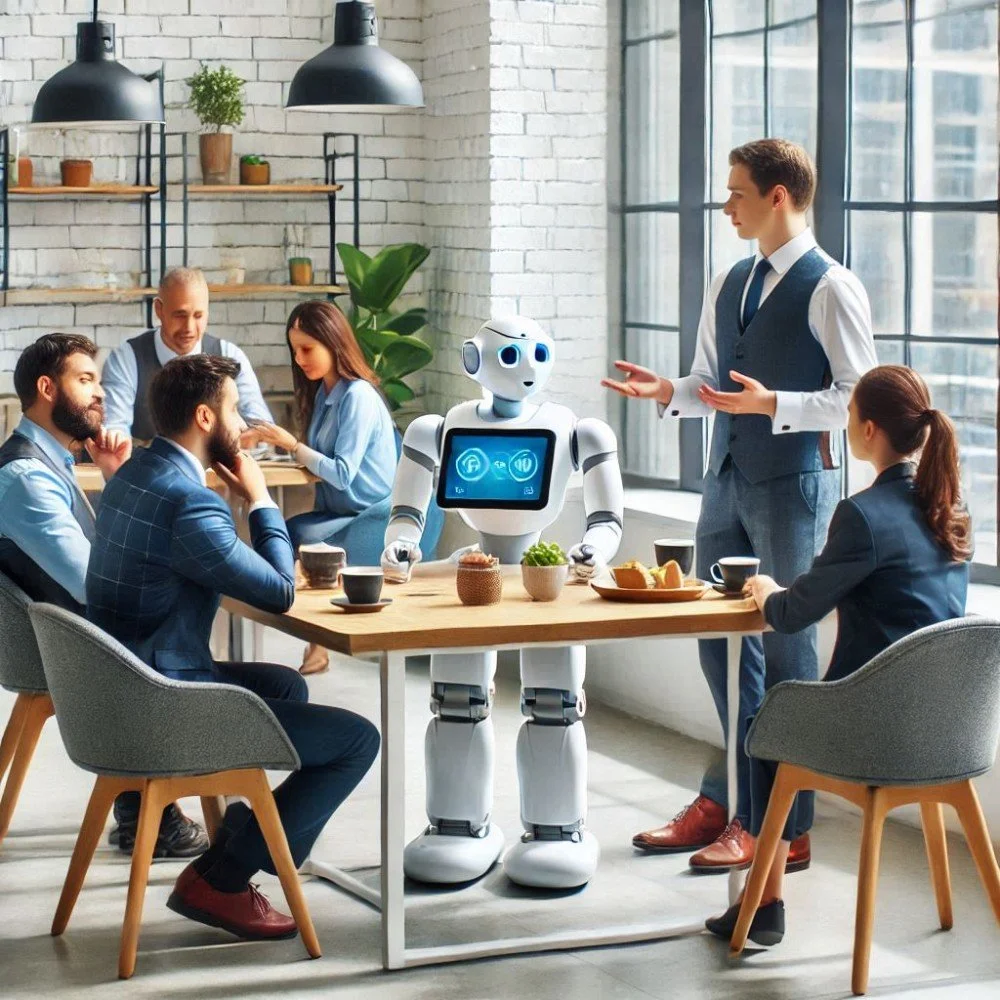
With AI agents running in the background, a department's real-time task status could be automatically communicated to the relevant change agent(s).
As the project progresses and human change agents have a better sense of how their teams are embracing the change, they could ask their AI copilot to monitor patterns or actions. For example, if the change agent from operations records a video explaining a team-specific task their colleagues must complete before the move, they could ask an AI agent to provide an update every 24 hours on who has or hasn't watched it.
Bring Your Leaders Across the Line
Inspired by what you're reading? Phil's talks and workshops bring a credible, cross-functional perspective to help organizations reimagine and redesign work for better experience and outcomes.
Better Together: Change Agents + AI Agents
No matter the example, in future complex enterprise change programs, AI agents could analyze historical data to predict which teams might struggle with adopting new processes, while human change agents design tailored interventions and lead the conversations that inspire buy-in.
This combination accelerates the pace of change and makes sure it resonates at a human level.
There are obviously going to be ethical considerations to address in this partnership, both in what data the AI is reading and for what purpose and who is making the final decision on resistance-mitigating measures. Employees probably won't mind if an AI agent reminds them to fill out a form, but they may object to having an AI agent pass judgment on their readiness for a change that materially impacts their role or feeling of belonging.
What Can Change Agents Do Monday?
If you're leading a change program right now—whether AI adoption, office transformation, or organizational restructuring—consider these entry points for integrating AI agents into your change agent network:
Start small with monitoring. Pick one compliance task (form completion, training module progress, policy acknowledgment) and test whether an AI agent can track completion and flag outliers faster than your current manual process.
Augment your communications. Ask your change agents to draft one message to their teams explaining an upcoming change, then have them run it through an AI agent with context about their department's culture and recent concerns. Compare the suggestions.
Map the invisible network. Use AI to analyze collaboration patterns and identify the informal influencers you might have missed when recruiting change agents. You might discover your most effective champions are people who would never self-nominate.
The goal here is counterintuitive: freeing up your human change agents to spend more time on the human elements—the conversations, the trust-building, the emotional work of transformation—by letting AI handle the monitoring, pattern recognition, and administrative tasks that consume their time today.
Change sticks when people are genuinely invested. AI agents can help change agents reach more people, respond faster, and spot resistance earlier. But the work of inspiring buy-in?
That's still profoundly human.

If you're leading a change program right now, what's stopping you from experimenting with AI agents in your change management approach? Get in touch to let me know.