

In Good Faith

I am writing from vacation, so this one will be short. No framework, no Monday list. I just wanted to share something incredible I saw last week.
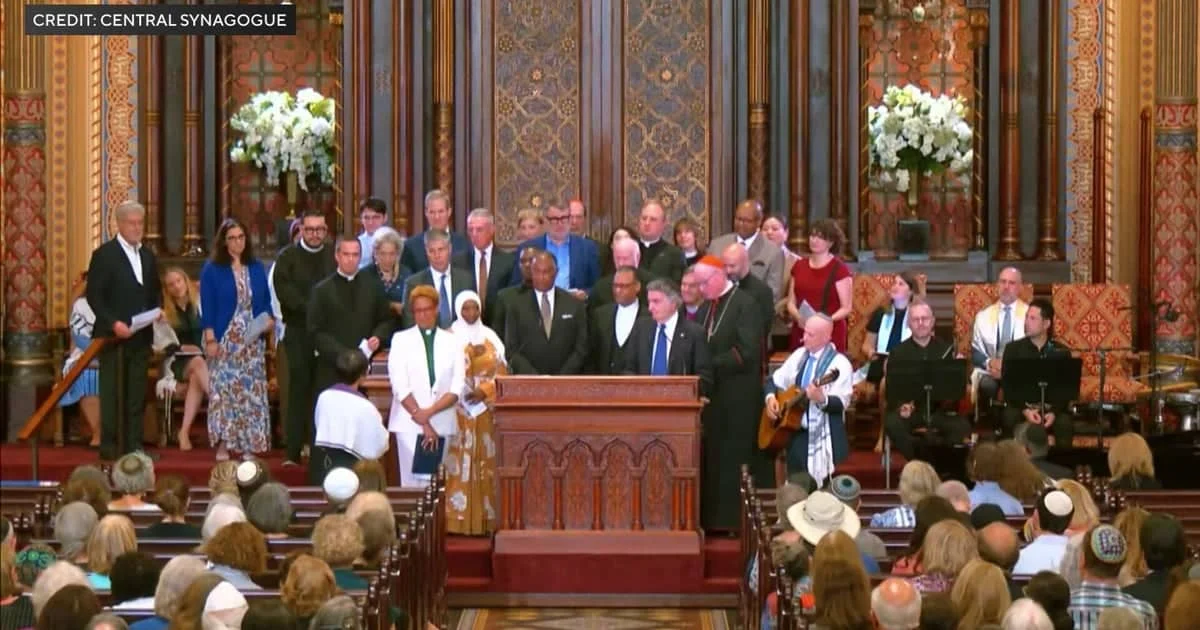
Last Friday night, just over twenty civic leaders and clergy stood together on the stage at Central Synagogue, where my family has been a member for nearly 40 years. They represented churches and mosques and other synagogues from all around the city.
The Friday before, a man disrupted the start of weekly Shabbat services, struck a congregant, and was taken into custody by a police officer working a detail on site. Nobody was seriously hurt. Services continued that night, and again the next morning. The man was later charged with a federal hate crime and destruction of religious property.
My family was not present for the incident, and learned about it the way most of the congregation did: via email describing what happened.
A few days later, our senior rabbi wrote a beautiful note about the outpouring of support from around the city and the world. One line stood out to my wife and me:
There will be much to consider in the weeks and months ahead—about security, about community, about how we confront antisemitism without allowing it to define the boundaries of our Jewish lives. But for now, there is something powerful we can do, simply by showing up.
So we attended services last Friday night, and were floored by the extraordinary show of togetherness across religious lines. The head of the NYPD also gave an impassioned speech about protecting the people who gather there.
What I have since learned, from a press interview, is that a priest from a nearby church was one of the first calls after the incident, based on a preexisting friendship with one of our rabbis. They have been running interfaith courses together for several years, including a recent one on the founding principles of freedom.
Two months before the incident and subsequent show of support.
The whole story is well documented in the press if you are interested. I will be thinking about both services for a long time, and will close today with one small parallel from my own work.
I have written about bridging capital twice before — in the context of Tulsa Remote, and about finding your professional opposite. Robert Putnam's distinction is that bonding capital deepens trust among people who already resemble each other, while bridging capital forms across lines of difference.
Both times I was writing about a practice that companies could build on purpose, across functions that rarely have a reason to meet.
I never expected to see it happen in a religious service.
I suspect the clergy who stood together on that stage had relationships built over years of mutual respect for each other's congregations and communities. No one had to ask them to come.
Good faith has to exist before anyone needs it.

Who outside your own function would show up for you, and when did you last give them a reason to? If this resonates with your work, get in touch.