

Who Is Your Antipode?

Over six weeks of World Cup insanity, my sons and I spent a lot of time looking at two things: the tournament bracket and a world map.
The expanded, 48-team competition introduced the world to tiny countries like Curaçao and Cabo Verde, and 19 combined African and Arab nations, twice as many of each as in past years. For them, this meant many questions about physical location, politics, colonialism, and ancestral histories.
"Wait, Morocco's Achraf Hakimi was born in Spain?" the younger one asked.
I answered as best I could all around. I have been to nearly 50 countries, and most days I connect with people I have never met in person, half a world away. Getting outside your own point of view is hard. It usually takes real distance to notice how differently other people live and work.
Maybe even as far as you can go on this earth, or in your organization.
Most of Your Opposite Is Water
Our word of the day is antipode, which is the exact opposite side of the globe from a given point. This delightful website will show you the antipode for your location which, for most of you, will be in an ocean. Only 15% of the world's land has a land-based antipode.
Mine is no exception. New York City's antipode sits in the southern Indian Ocean, around 800 miles southwest of Perth, Australia. Perth is the closest a person can stand to the other side of my world.
And I went there once, because of a five-minute speech.
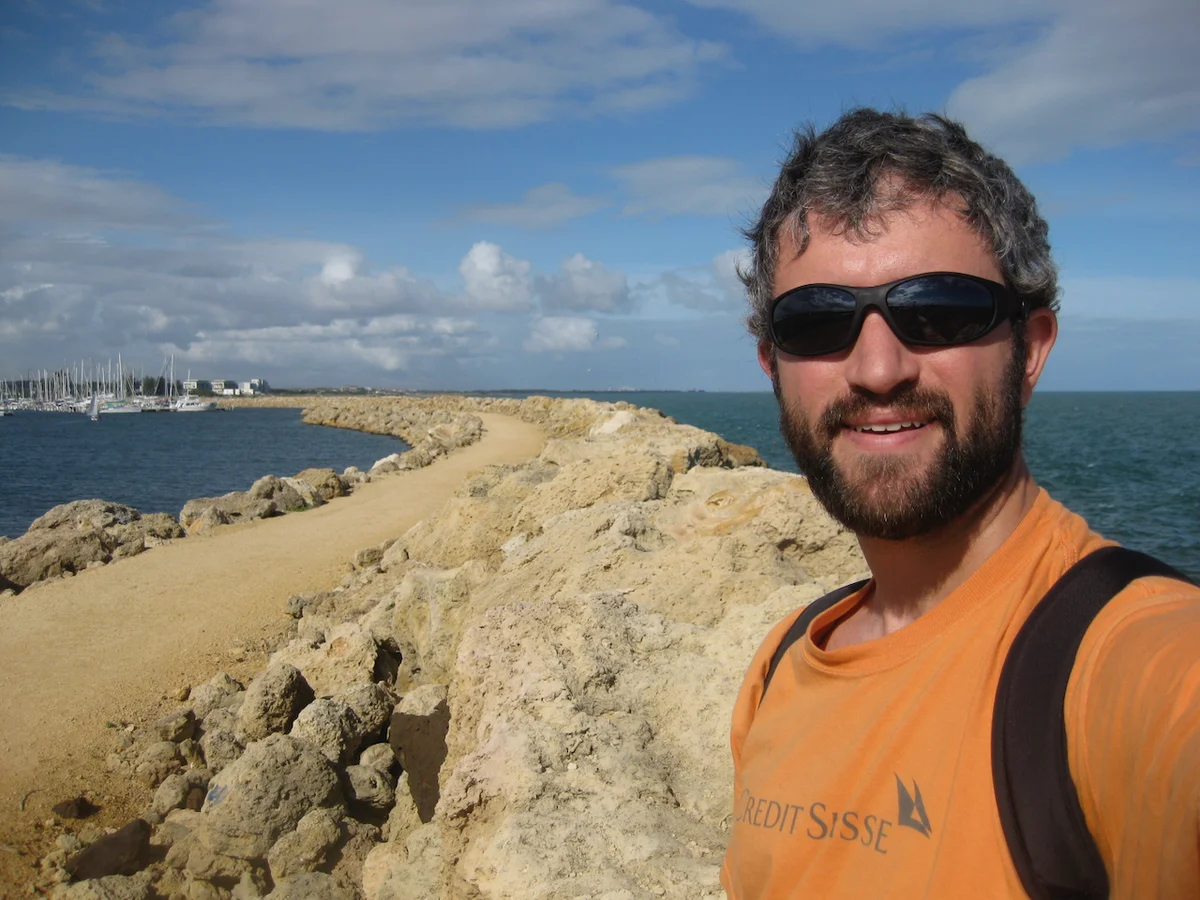
Years ago, I belonged to a Toastmasters (public speaking) club at Credit Suisse. An HR colleague stood up for her first "icebreaker" speech, and told us she was from Perth, "the most remote city in the world." Having grown up in New York City, where density and proximity are badges of honor, hearing about a place that far from everything really blew my mind. Years later, I took a sabbatical and traveled (mostly solo) around Oceania and Asia, making a point to visit Perth.
What felt like a minor bucket list accomplishment ended up teaching me something about ways of working that I never could have imagined.
Mining for Information
On my first night in Perth, I built up the courage to ask someone in a bar why everything seemed so expensive and why pockets of the city felt empty. They explained that Western Australia runs on iron ore, which means Perth runs on a work pattern called fly-in fly-out.
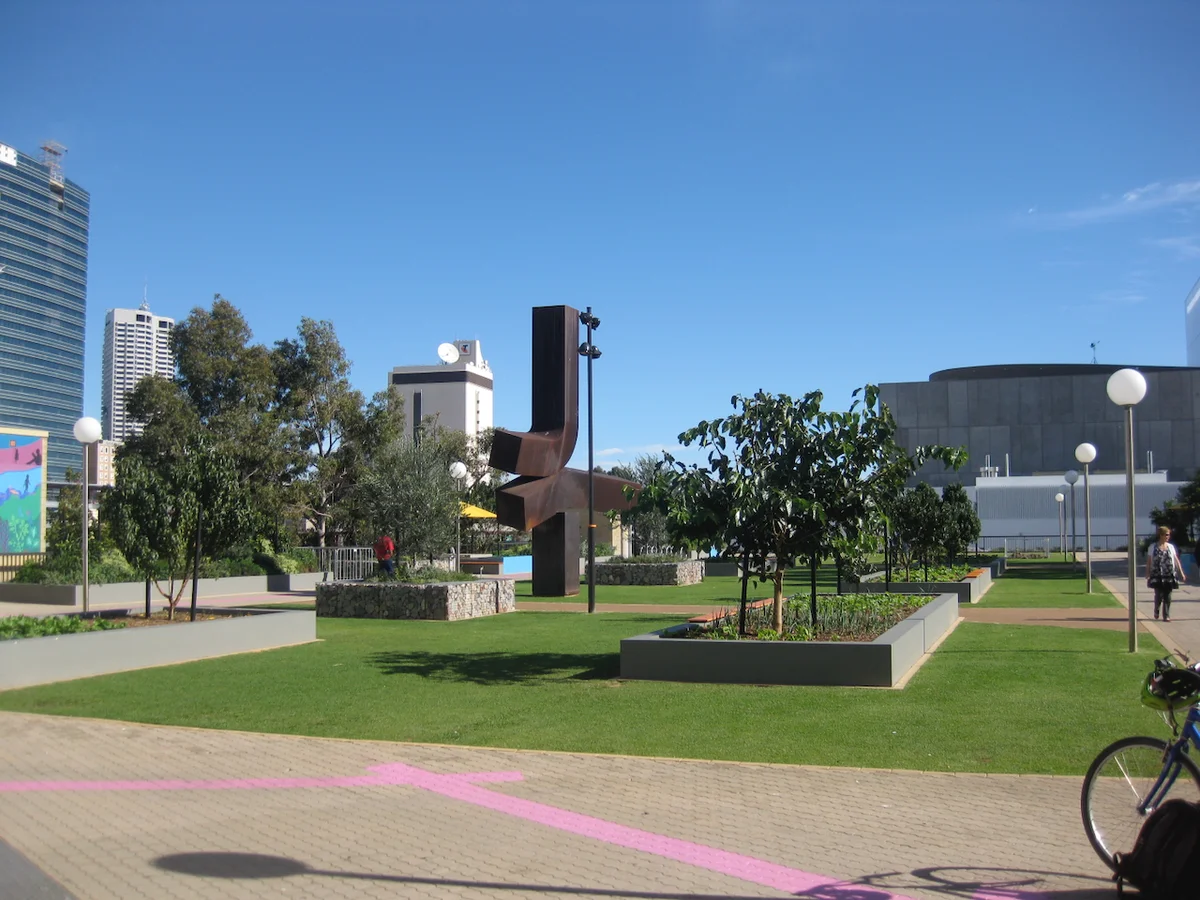
Many locals board a plane in Perth, fly hours inland to a mine site, work two or three weeks straight, sleep in camps beside the pit, then fly home for a stretch and start over. Work can feel like the place you live, and home can feel like the place you visit.
I thought Perth's remoteness was wild, but this was something else entirely.
Even though I had yet to start my workplace strategy career, I worked for a global financial institution and felt pretty confident that I knew how the working world worked. The mining pattern held zero percent of my attention, because it existed nowhere near the places I lived in or thought about.
It was an "unknown unknown" to me. But the blind spot turned out to be useful.
Every claim about the future of work carries a geographical bias. RTO math, hybrid ratios, commute burden, the office as a magnet for connection: each one quietly assumes a worker who sleeps at home most nights. Hundreds of thousands of people work under rules where that assumption falls apart.
My short Perth experience changed how I've read every industry report ever since.
My Other Antipode Has No Office
Perth is my antipode on the map. Years later, my career (and a pandemic) handed me another one.
I'm generally known as a workplace guy who stands in front of large rooms and argues about the value and experience of physical workspaces. Covid-19 introduced me to an ecosystem of remote-work experts. Some have literally never worked in a normal office.
Fully remote companies like GitLab were initially my professional antipode, but I have learned to appreciate them the same way I did in that bar in Perth: asking what I was missing.
What I found has sharpened my arguments about the future of work. Remote-first teams build the trust and the unplanned collisions I used to credit to good space, and they do it without a physical water cooler. They design on purpose what office companies assume they get for free.
And it boosts organizational health, as I proved while at McKinsey.
A speech got me to Perth and its mining rotations; a pandemic got me to fully remote work. Neither was a place I'd have studied on my own.
Identify Your Mental Antipode
Your professional antipode sits opposite the topic that fills your head most of the day, and it shouldn't be that hard to find.
Robert Putnam split social capital into two subtypes, a distinction Justin Harlan once made clear to me. Bonding capital builds trust among people who already resemble each other. Bridging capital forms across lines of difference, and it carries the mobility and new thinking that bonding leaves on the table.
Organizations pour almost everything into bonding. Team offsites and functional retreats, each one real and useful, each one pointed inward. Harvard's Raj Choudhury calls the individual version homophily, the pull toward people like you.
Left alone, your network fills with your own reflection.
Define your antipode by the primary focus of your mental space, not your title. If your day belongs to buildings and physical assets, your antipode may be in digital product. Think about people and talent all day? Maybe yours is in manufactured goods on a production line.
Hierarchy, geography, and role type work as axes too.
The ocean rule holds here too. Searching for someone completely different from you may return open water and infinite difference. Prioritize what you want to learn, then find the land on the other side.
Book Your Trip on Monday
Curiosity about the far side of the map comes easily during a World Cup, but keeping it alive inside an organization takes effort.
- Name your default in one sentence. Write down what actually fills your head: buildings, budgets, people, code, contracts, throughput. That sentence is the coordinate you are going to flip.
- Let an AI assistant dig for you. I facilitate the AI Leader Advanced cohort for Lead With AI, where we teach learners about the power of LLMs as thought partners. Feed one your sentence and ask for five roles or functions whose daily reality sits opposite yours on the axes you care about. Then make it argue for which one has the most to teach you.
- Travel to the antipode. Pick one, find the human version inside your company or your network, and book time to chat. Open with one question: what is completely normal in your work that would surprise me?
My sons needed a World Cup to look at the whole map. You just need to pick a point on the far side of your org chart and go.

If you were to flip your default coordinates and spend a week genuinely curious about the part of your organization you rarely think about, what would you discover about how your work actually creates value? If this resonates with your work, get in touch.